5 Truths I Wish All Clients Knew
5 Truths I Wish All Clients Knew
By Kiera Dressler-Reed, LMSW
Clinical Social Worker
In my work as a therapist, I’ve had the privilege of walking alongside people across the lifespan—from young children just beginning to understand their inner world, to adults carrying decades of lived experience. Today, I work primarily with teens and young adults, and over time, I’ve noticed the same life lessons surface. They come up in my sessions with clients, in conversations with my own therapist, and most of all in the quiet moments when I’m most honest with myself. These are the lessons I find myself returning to, and passing on, time and again. This list grew out of that repetition. My hope is that it offers you clarity, motivation, or a moment of reflection.
I encourage you to take what resonates, and leave the rest.

5 Truths I Wish All Clients (And I) Remembered:
#1. No one is coming to save you.
Oof – okay. That’s an abrupt start, but stick with me here.
You’re not in the fight alone. Truly, you’re not. If I believed that you were, I wouldn’t be in this line of work. Your therapist, your best friend, your spouse, your mentor — we’re all meant to be your fearless cheerleaders. We can hear you, advise you, challenge you, and hold you accountable…but at the end of the day, we can’t do the work for you. Whether you want to get in the best shape of your life, leave the job that feels like it’s depleting your soul, or let yourself feel everything you’ve been bottling up for the last 20 years — only you can take yourself across the finish line.
The person you’re waiting to come save you is yourself. This may sound scary, but it’s also highly empowering, because it turns out that’s the only person you have control over anyway. If our success was entirely contingent on another person, that could be great if you have a steadfast leader, and an absolute trainwreck if your person is flaky and unreliable. Thankfully, you get to be your own steadfast (or unreliable) leader — the choice is yours.
We can sit in therapy for 52 hours over the course of a year, make the best game plan, explore all the pros and cons, and do all the motivational interviewing the world has to offer. But when you leave my office, if you aren’t ready to take actionable steps towards change, then change isn’t to be expected.
This brings me to number 2.
#2. Most of us require a certain level of suffering before we’re ready to do things differently.
(Ah. Another lighthearted one, am I right?)
I knew I was in active addiction for roughly seven years before I became ready to get sober. That was seven years of life getting exponentially worse — but, not quite bad enough for me to change literally anything about my substance use. Early on when I was struggling in recovery, my very first sponsor heard my trepidation over a phone call and said something that permanently seared its way into my brain. In the most gentle tone, she said, “Maybe you haven’t suffered enough yet.” I remember feeling angry at her for questioning my commitment, but most of all I felt angry because I knew she was right. I “went back out” shortly after that, and gathered more evidence on why this way of living was making my life come undone at the seams. Eventually, I reached a breaking point. I decided to put the shovel down and stop digging myself into a deeper hole. It was time to start climbing out, instead.
I share this because:
A. You don’t have to be as stubborn as I was; you’re allowed to stop digging whenever you want, and
B. I think it’s representative of most people’s resistance to change.
Nine times out of ten, my brain wants to choose a familiar hell over an unfamiliar heaven — and that’s why I can’t always listen to it. For many of us, change doesn’t happen until the pain of staying the same becomes greater than the pain of change itself.
But this truth cannot be weaponized—against ourselves or against others—as a reason to delay doing the work, avoid accountability, or stay stuck in patterns that we already know are harming us. Awareness isn’t permission to opt out of change; it’s an invitation to take responsibility for it.
Even if it takes you seven years.
#3. No one is thinking about you that much (thankfully!)
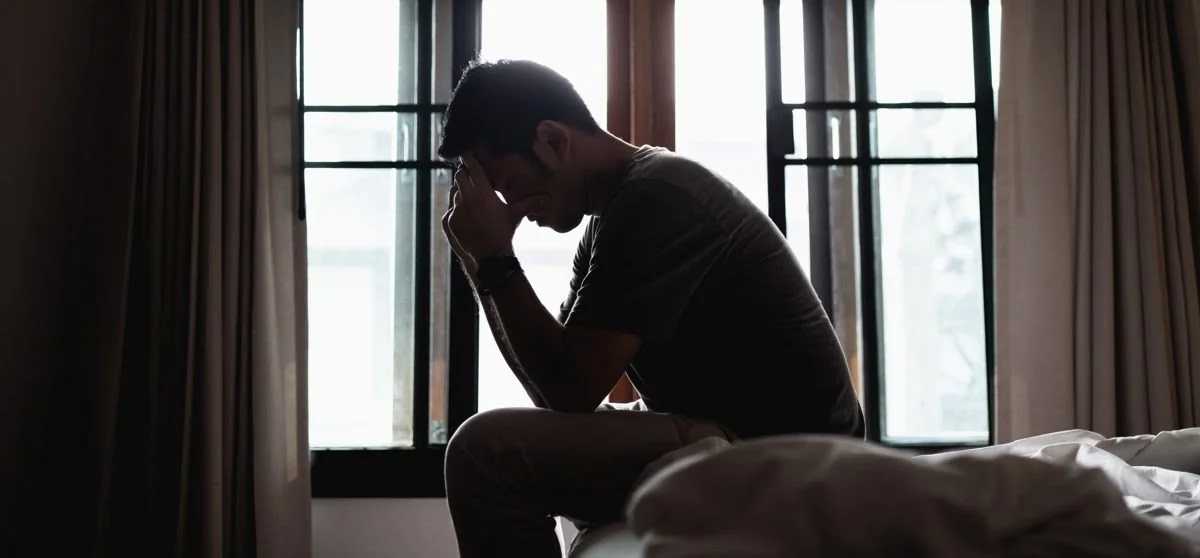
I’ve spent a lot of my life worrying about what other people think of me. I still do — and realistically will probably continue to until I reach some breaking point where I’m ready to change (ahem, cue truth #2). Even now, as I write this, I feel the fear bubbling up. There’s a possibility that you, as the reader, are judging me. But I can rest assured that it’s unlikely you’re going to think about this blog post for the next day, or week, or year. The judgement will fade rather quickly, because the truth is, I’m not important enough to be thought about that much — and for me, that’s a good thing.
I hear so many clients express this same sentiment — fear of judgement, of embarrassment, of not being liked or accepted. And frankly, it makes a lot of sense. Evolutionarily, it was in our best interest to be part of a pack — that natural drive to be liked and accepted served a survival purpose. However, now in modern day, (and with much help from social media) that drive has gone awry, and we can quickly over-assume how much we believe people are thinking about us.
I’ve come to realize: if we’re all worrying what people are thinking about us (which is really just another form of being overly self-focused), then we all must not have much mental capacity to be judging one another. We’re all too busy being stuck in our own heads. Even if I pass a snap judgement, it may stick in my mind for five seconds, and then I default back to thinking about myself. That doesn’t make me selfish — it makes me human. And in some ways, it’s a gift — because just as much as I don’t want to be judged, I also don’t want to waste my life judging other people either.
The ultimate goal is presence, getting out of “self,” and doing so without assigning judgment to everyone else along the way — but that’s a skillset that could be its own separate blog post. In the meantime, just try to remember: no one is thinking about you that much, and that’s a good thing.
#4. Easy has a cost.
Whether you feel powerless over something or not (e.g., a substance, constant worrying, screens, etc), I think it’s best to tread very carefully with anything that gives you instant gratification — and it’s not because you don’t deserve to feel gratified. But easy has a cost. The easy immediate decision oftentimes has a harder cost down the road. The harder immediate decision just might be the thing that leads you closer to your goals.
Taking care of your body is hard. Living with preventable health problems is harder.
Uncomfortable conversations are hard. Resentment is harder.
Saying no is hard. Over-extending yourself is harder.
Feeling your feelings is hard. Being numb and out of touch with yourself is harder.
Showing up for work every day is hard. Being unemployed is harder.
Strangely, life seems to get harder when our default is to try and make it easy in the moment.
There’s an Anthony Bourdain quote that reads, “I understand there's a guy inside me who wants to lay in bed, smoke weed all day, and watch cartoons and old movies. My whole life is a series of stratagems to avoid and outwit that guy.” — because if I were to give into that part of my brain, life would first feel really easy, and then inevitably get really hard.

#5. The basics are the basics for a reason.
I got into weight lifting back in 2019, mainly because I wanted my body to look different. I kept showing up because I wanted my brain to continue to feel different. Recently, I jokingly said to my therapist, “It feels like a scam that I have to go to the gym 4-5 times a week just to not feel depressed.” But, going back to #4: going to the gym is hard; depression is harder.
I don’t know a whole lot, but I’m pretty certain our bodies were not designed to be sitting and looking at a screen for 10 hours a day. And yet, for so many of us that has become the norm. If you’re consistently living a sedentary lifestyle, out of touch with nature, chronically dehydrated, sleep deprived, and operating on quick and easy processed foods — not only is your body not going to feel awesome, but your brain isn’t either.
I say this with a grain of salt, because I know there’s a lot of privilege that comes with access to these things that should really be basic necessities. Whole foods are more expensive and cooking takes a lot of time. Gym memberships are pricey and may feel unrealistic when you’re rushing home from work to take care of the kids. It’s hard to get a solid eight hours of sleep when you’re working a double shift. But, know that you don’t need to do a full 180 degree pivot to start making a difference. Small changes matter, and frankly they’re usually more sustainable than going full scorched-earth with your new health regimen.
Buy a reusable water bottle and carry it around with you so you’re more likely to stay hydrated
Go for a 15 minute walk on your lunch break
Sit outside in the sunshine while you eat breakfast (ideally not in Michigan winters)
Do some gentle stretches while you watch your favorite tv show
Spend 20 minutes technology-free before bed
The best kind of routine is the one that works for you, that you most enjoy, and that feels most sustainable. Connect back to what your body was made to do — move, be in nature, eat things that grow from the earth, sleep. You will be shocked at the impact it has on your mental health — or at least that’s been my experience.
These are the five things I wish every therapy client (and I) could remember as we navigate the complexities of life. My hope isn’t to be gentle for the sake of comfort; it’s to be honest in a way that’s useful. In my experience, the lessons that change us most are often the ones that feel a little abrasive at first. And even as I write these five truths, that doesn’t mean I live in accordance with them perfectly. We’re human. Part of the human experience is making mistakes, sometimes repeatedly.
So as you try to integrate all, some, or none of these takeaways into your life, I urge you most of all to show yourself grace along the way. Trust that you’re doing the best you can with what you have at this moment, and that there is still room to grow along the way. Strive for progress, not perfection. And don’t let perfect be the enemy of good.


Ann Arbor Providers:
Nicolas Jakowiec, MS, TLLP (Ann Arbor & Virtual)
Shannon Jirous, LLMSW (Ann Arbor & Virtual)
Farmington Hills Providers:
Rayan Namaan, MA, BCBA, LBA, TLLP (Farmington Hills & Virtual)
Kelsey Russom, MS, LLP (Farmington Hills & Virtual)
Fatin Jafri, MS, TLLP (Farmington Hills & Virtual)
Plymouth Providers:
Aziza Ghanem Bazzi, LLMSW, SSW (Plymouth & Virtual)
Philip Ognenovski, LLMSW (Plymouth & Virtual)
Antoinette Ulmer, LLMSW (Plymouth & Virtual)
Virtual Providers:
Carla DePalma, LPC, ATR (Virtual)
Introducing Mala’s Newest Provider
Now Accepting New Clients!
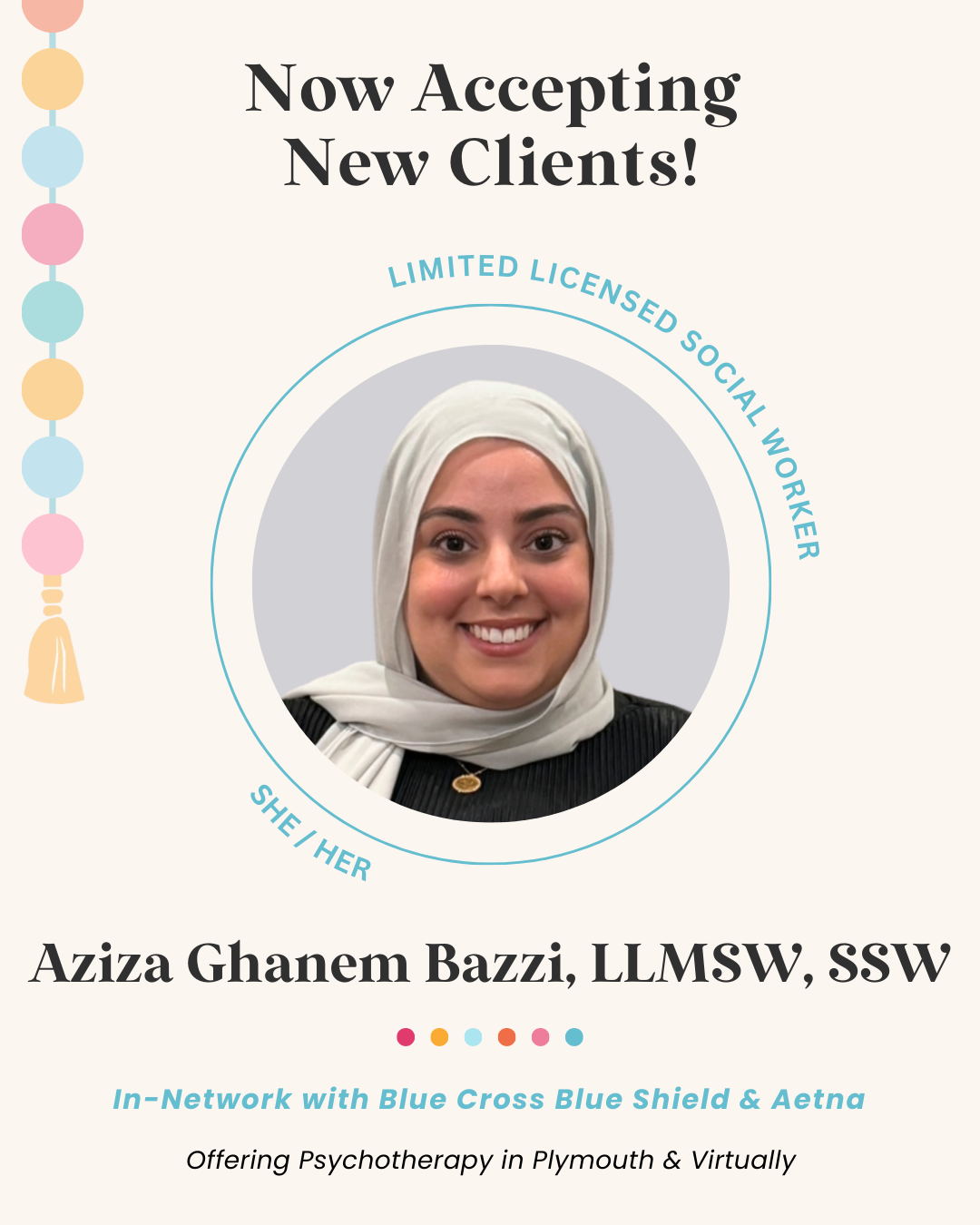
We’re thrilled to welcome Aziza Ghanem Bazzi, LLMSW, SSW to the Mala team! As a psychotherapist with past experience working in school settings, her passion lies in advocating for marginalized communities and empowering young people.
In-network with Blue Cross Blue Shield & Aetna
Accepting new clients in Plymouth & virtually
Afternoon & evening availability
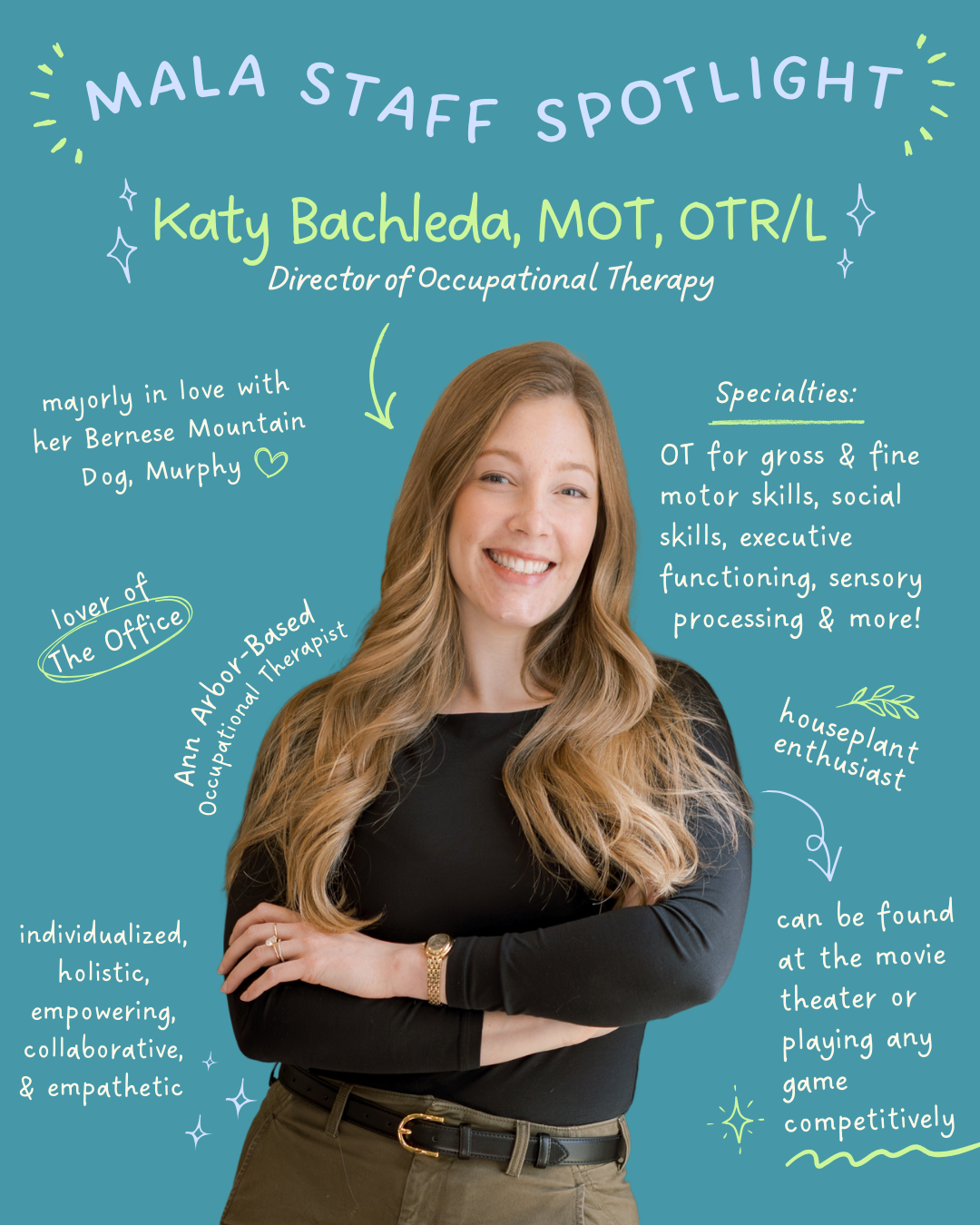
Learn About Our Occupational Therapy Director, Katy Bachleda, MOT, OTRL!
If you have any questions concerning care at Mala or would like to reach out for another reason, we’d love to hear from you.
Until next time,
The Mala Child & Family Institute Team
