The Cornell Case and the Conversations We Need to Have With Our Children About Consent
The Cornell Case and the Conversations We Need to Have With Our Children About Consent
By Dr. Hasti Raveau, PhD, LP
Clinical Psychologist, Founder, & CEO
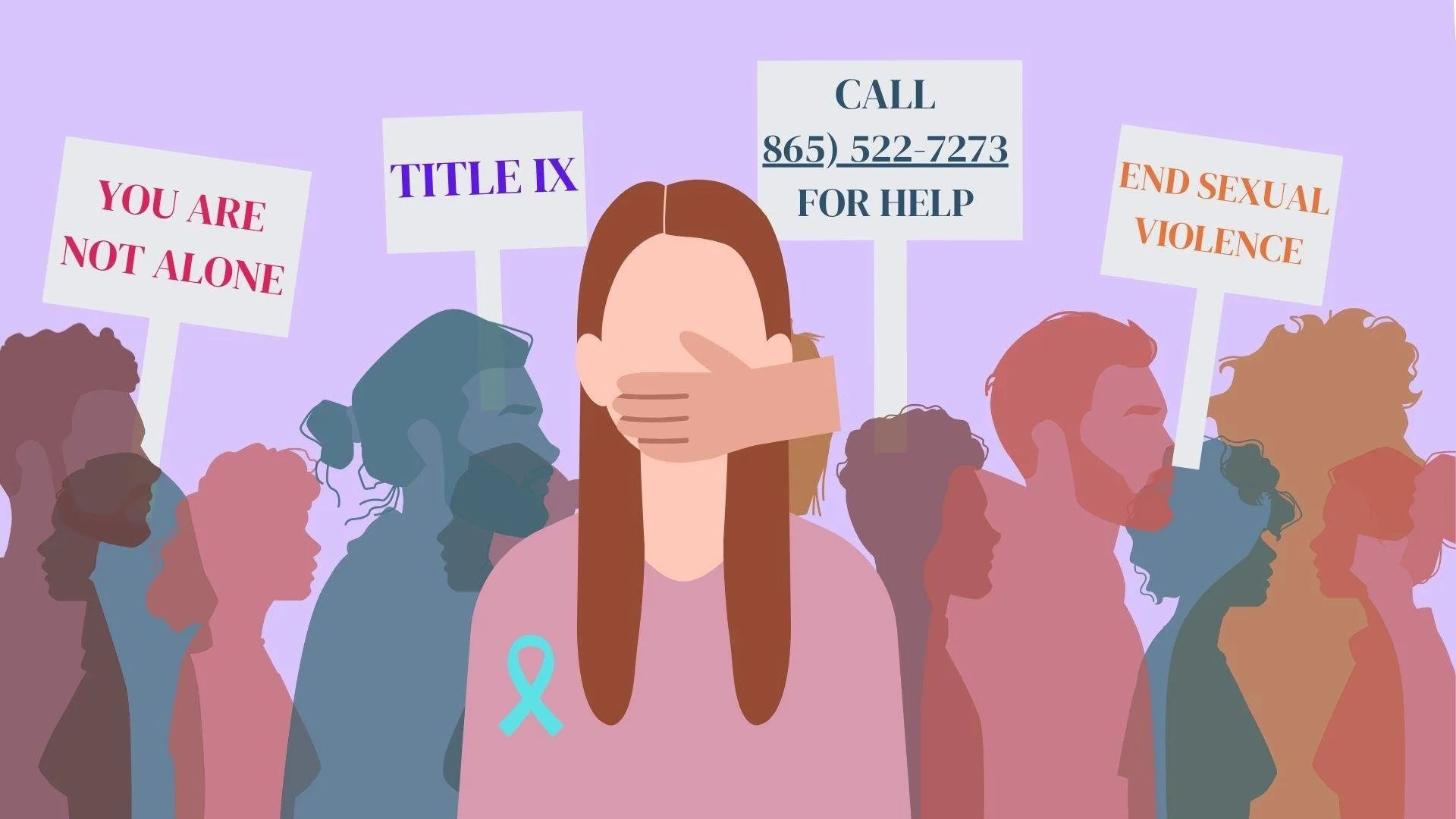
Trigger Warning: This blog discusses topics related to sexual assault and consent, and may be emotionally triggering for some readers.
There are stories that don't feel like stories about strangers. You read them and think about the night you made sure your friend got home. The drink you never left unattended. The location you shared. The keys you held between your fingers. I went through my twenties often anxious about being sexually assaulted.
And then, when you become a parent, you aren't only remembering the girl you once were. You're looking at your children.
That's where I found myself this week reading about the allegations involving seven former Cornell fraternity members and a young woman who says she was sexually assaulted after becoming heavily intoxicated and using drugs at a fraternity house in 2024.
Wednesday morning, as my husband was leaving, I said, “You have to talk to the kids about the Cornell case.” To our relief, their mom and stepdad had already beaten us to it. But sadly, we are having this conversation too late if it starts with Cornell.

Our daughters have been carrying the burden of prevention for generations.
Yes, we should teach our daughters how to protect themselves. But the more important question is: How do I raise my sons to become men other people's daughters are safe with?
At the end of the day, this is all about the kind of human beings we are raising. I always say that consent is a lesson about humanity, not just sex. We must believe that another human being has inherent worth simply because they are human.
Their body, vulnerability, and intoxication is not your opportunity. Their attraction to you or their previous yes does not eliminate their ability to say no. Another person's inability to protect themselves does not give you permission to take something from them.
What you do when another human being is vulnerable says something about who you are.
Sure, let’s teach the vocabulary of consent, but knowing the rule and developing a conscience are not the same thing. A recent systematic review of school-based sexual education and sexual-violence prevention programs found that 80% of the included studies reported increased knowledge, including understanding of consent, sexual health and grooming. Other reviews find that effective adolescent sexuality education tends to go beyond anatomy and risk to include healthy relationships, emotions, assertive communication, values, decision-making, coercion, consent and power.
How do we weave consent into our children’s character?
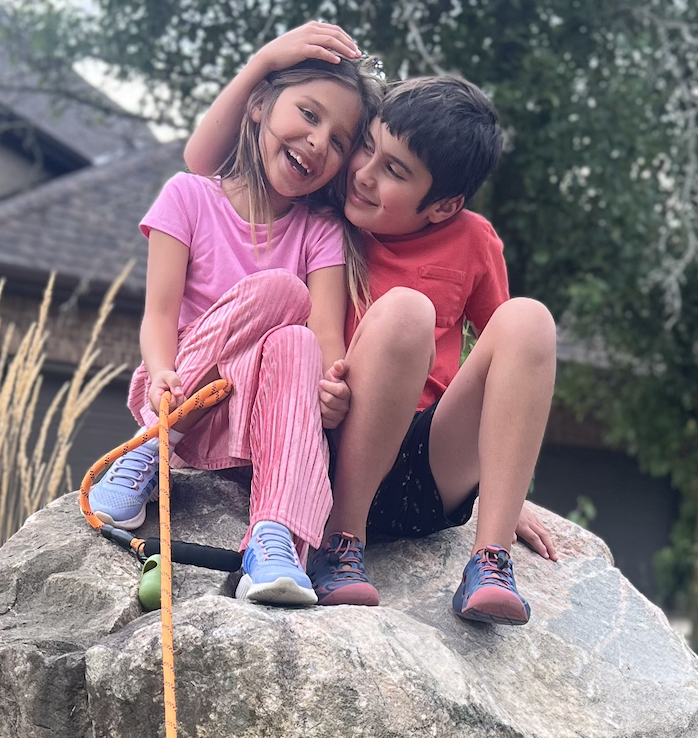
Yesterday my seven-year-old got into the car after school and broke down crying.
During a group project, she said, the other kids wouldn't let her color. They yelled at her.
Her nine-year-old brother immediately responded: “Well, you tell them to stop doing that because it’s not nice, and if that doesn't work, you go tell the teacher.” My son understands that you are allowed to say stop, leave, and get help.
That's consent education. It happens when a child says “stop tickling me” and we stop. Or when siblings are roughhousing and one says “I'm done,” and I'm done means it's over. We are teaching children if NO has power long before that word has anything to do with sex.
For my autistic son, the stakes are even higher.
A systematic review and meta-analysis of research involving autistic children and adults estimated an overall pooled victimization prevalence of 44%, with an estimated 40% prevalence for sexual victimization in the studies that examined it. Those numbers varied considerably across studies, so they should not be interpreted as predicting any one autistic person's risk. But the larger finding is that autistic people face significant vulnerability to victimization.
Therefore, neurodiversity-affirming parenting means making invisible rules visible. We teach explicitly:
This is your body and this is someone else's body.
You can say no. So can they.
If you aren't sure if someone wants something, you stop and ask.
Someone can change their mind.
Being rejected will hurt sometimes. You can survive that hurt without hurting someone else.
If someone is vulnerable, you help protect them.
My son's autism should not be used to excuse violating another person's boundaries and should not mean we send him into the world without teaching him how to recognize when someone is violating his.
Then, suddenly, they're 14.
My step-son just started high school. Right now him and his friends are in the season of asking girls to Homecoming. It's awkward and exciting and a chance to teach him some lessons:
What will you do if she says no?
Can you tolerate embarrassment without becoming mean?
Can you be disappointed without retaliating?
Can you still treat her with respect on Monday?
Can you want something without deciding you are entitled to get it?
Can your friends laugh at you without you needing to prove your masculinity?
Can you belong to a group without surrendering your conscience to it?
As much we hate to admit it, our kids’ SAT score will tell me very little about the kind of human being standing in a room with someone vulnerable. A systematic review of 27 high-quality studies, including 21 randomized controlled trials, found that bystander programs improved actual intervention behavior among adolescents and college students, along with some measures of confidence and willingness to intervene. The effects were not durable, and the review did not find evidence that these programs reduced participants' sexual-assault perpetration.
There is no neat five-step parenting program that guarantees our children will always make the right choice. Character requires repetition. Our culture matters, so do the peers. So imagine your teenager at a party, and someone is extremely intoxicated. Their friends are laughing. Someone starts recording. Someone suggests taking that person somewhere private. Your child isn't initiating it
We have to raise kids who say: “No. We're not doing this.” Gets the vulnerable person somewhere safe, calls for help, and is willing to lose friends rather than lose their humanity.
And then, suddenly, they're 17.
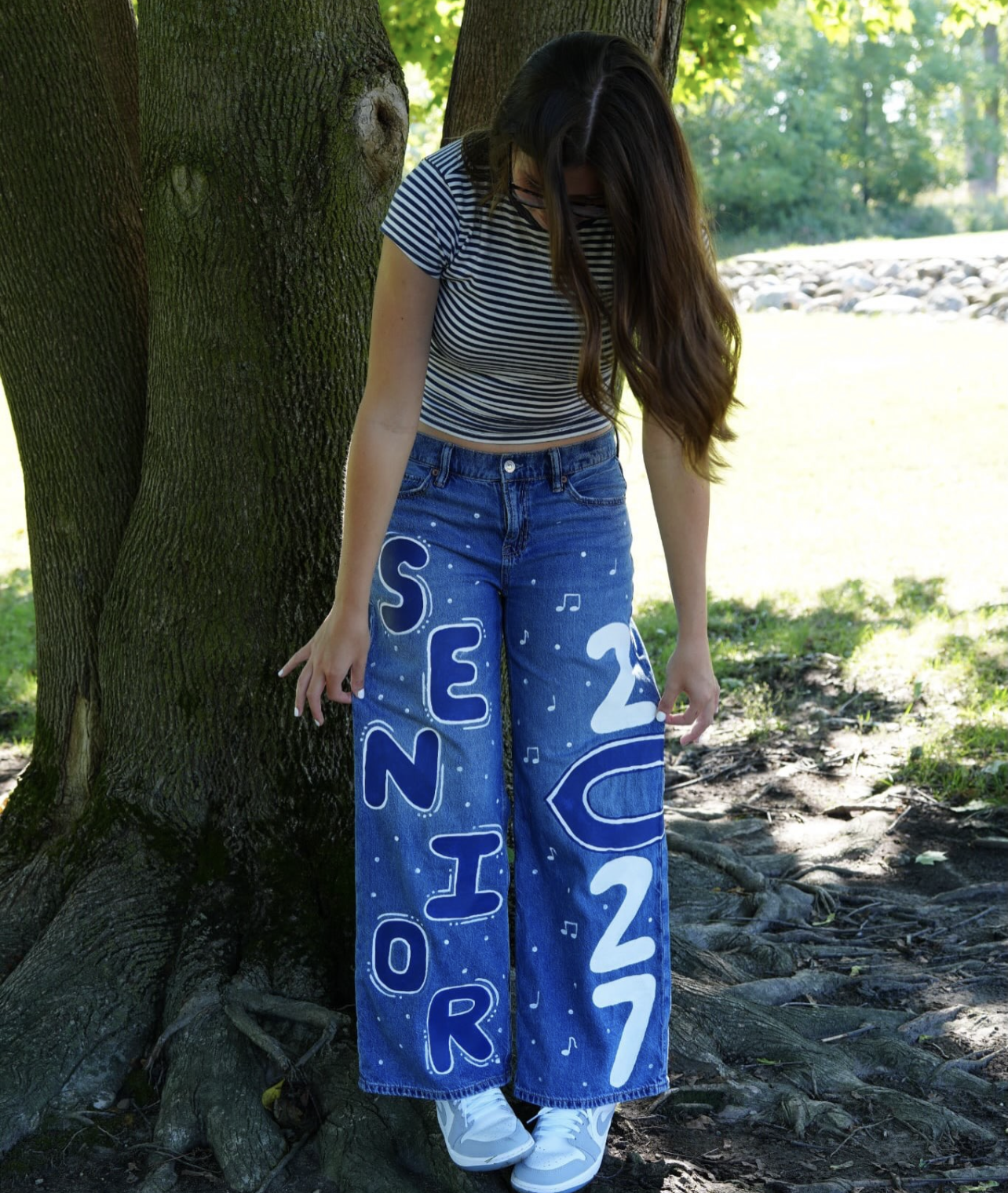
My step daughter is 17, and we're helping her prepare to apply to college (she wants to major in psychology, YAY!). Soon we will be dropping her off on a campus and I know all the things her mom and I will want to tell her. But I hate that generations of women have inherited the same survival instructions.
Someday, our children will enter rooms we cannot enter with them.
We will not know who is there or what they are drinking. We will not hear the jokes being made, see the person becoming impaired, or witness the moment when everyone else looks around to see what everyone else is going to do.We will not be there to whisper the right answer.
So let’s hope we are all raising human beings who understand that another person's humanity is not conditional and who, when everyone else stays quiet, is willing to say: “No. This isn't right.”
Upcoming Events at Mala
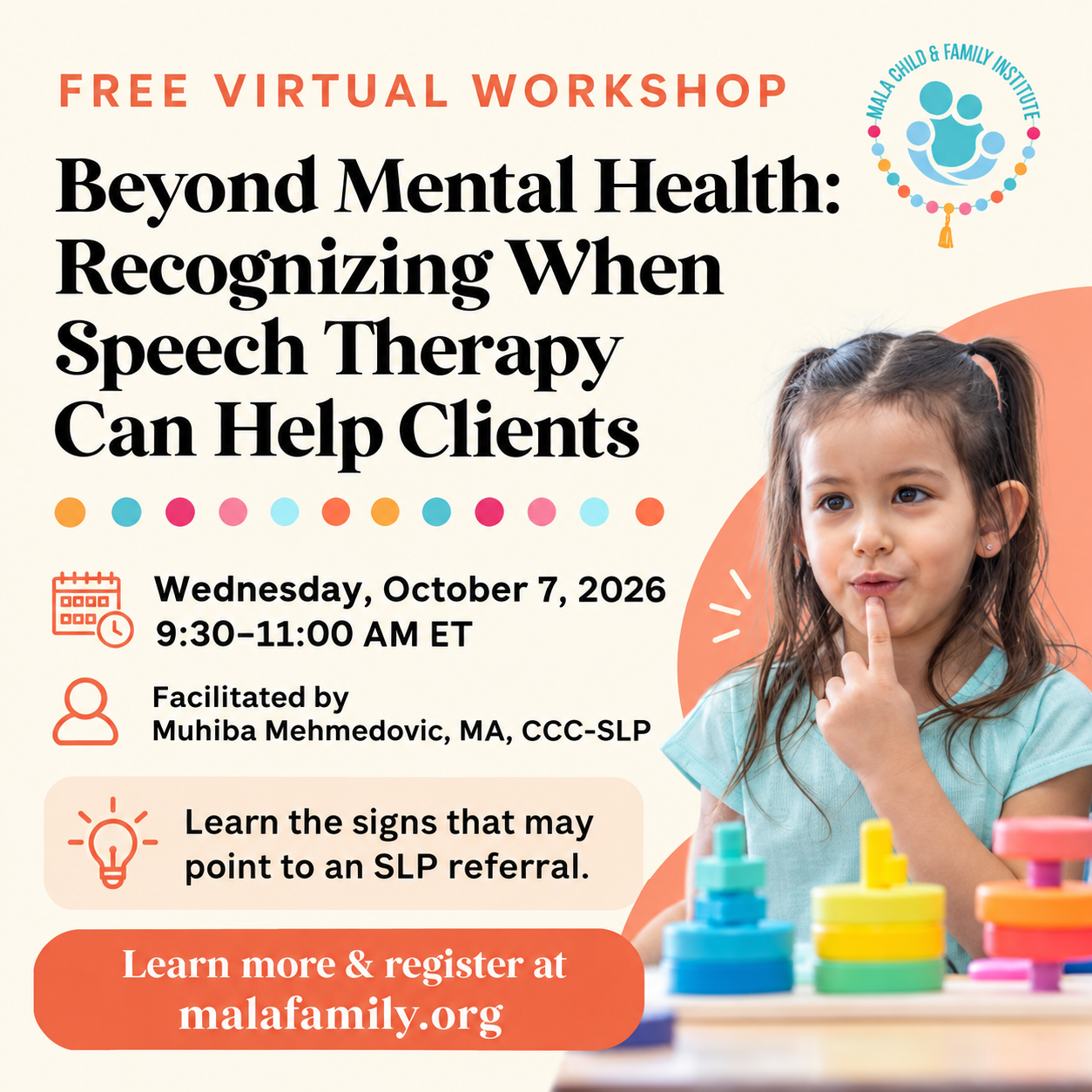
Workshop designed to better recognize speech, language, communication, and feeding concerns that may impact clients’ daily functioning. Learn common signs that indicate a potential need for an SLP referral, and how mental health and speech-language professionals can work together to provide more comprehensive care.
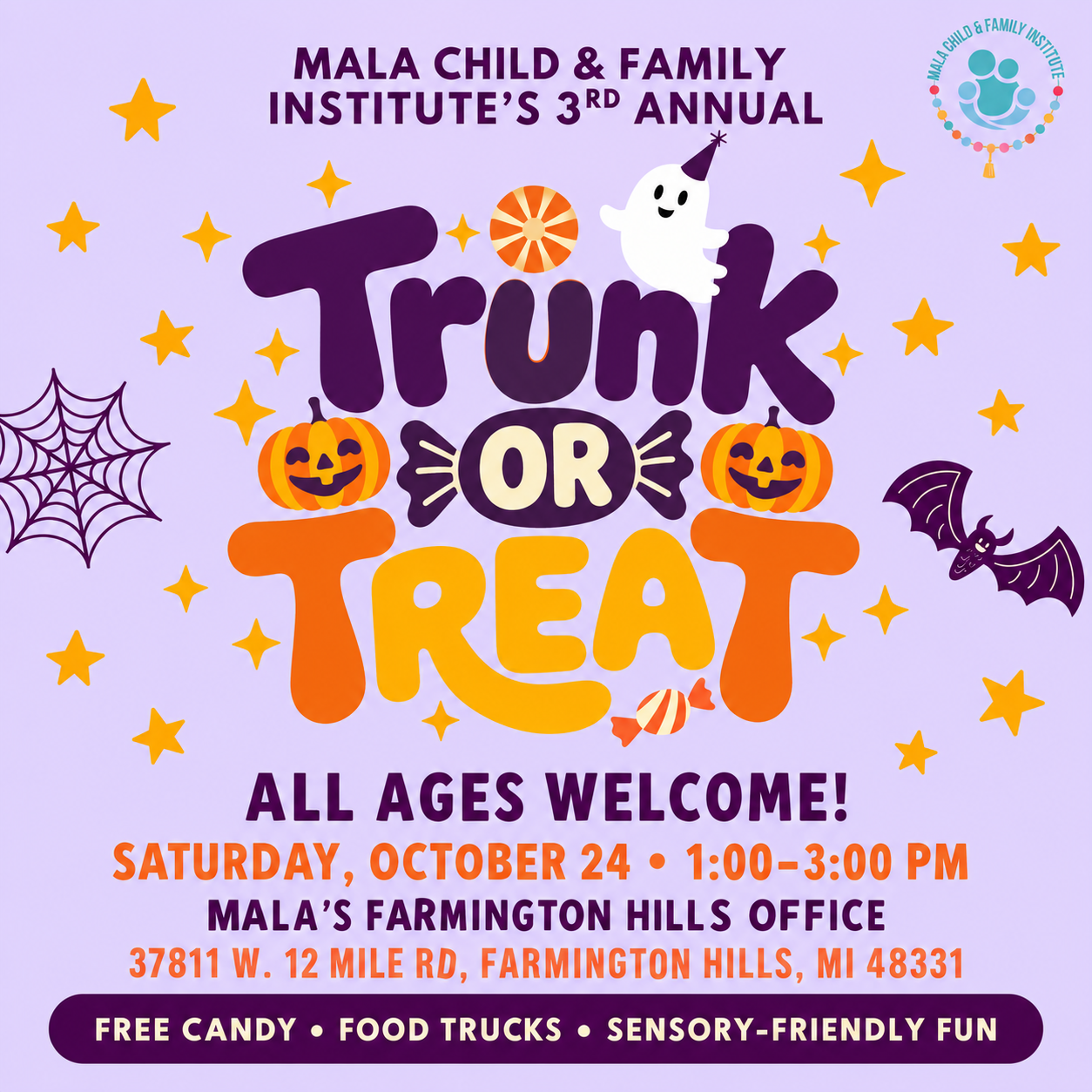
Bring the whole family to Mala’s Farmington Hills office for an afternoon of Halloween fun, community connection, and sensory-friendly activities!
Kids of all ages are invited to come dressed in their favorite costumes, collect plenty of candy, and enjoy a welcoming, family-friendly atmosphere.
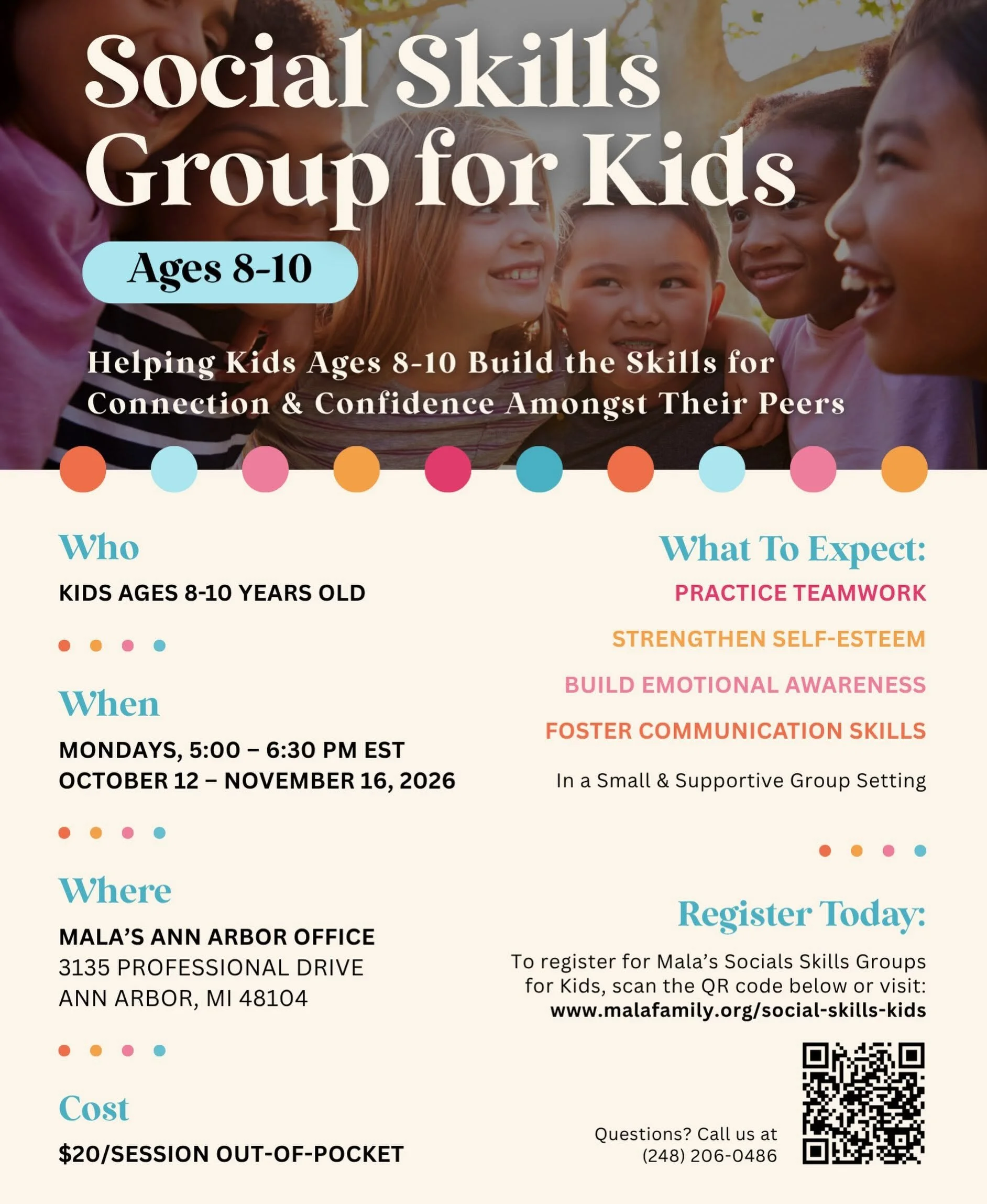
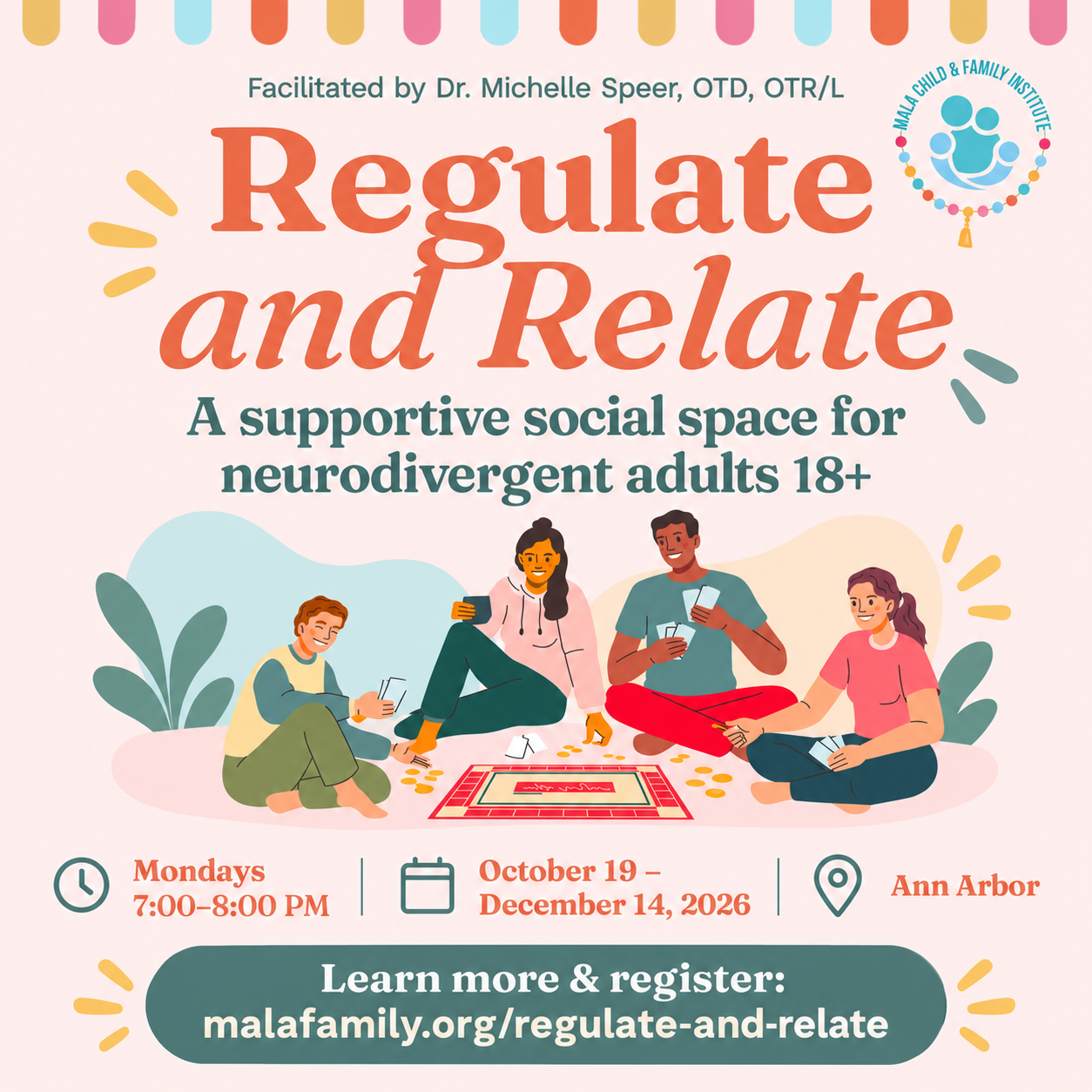
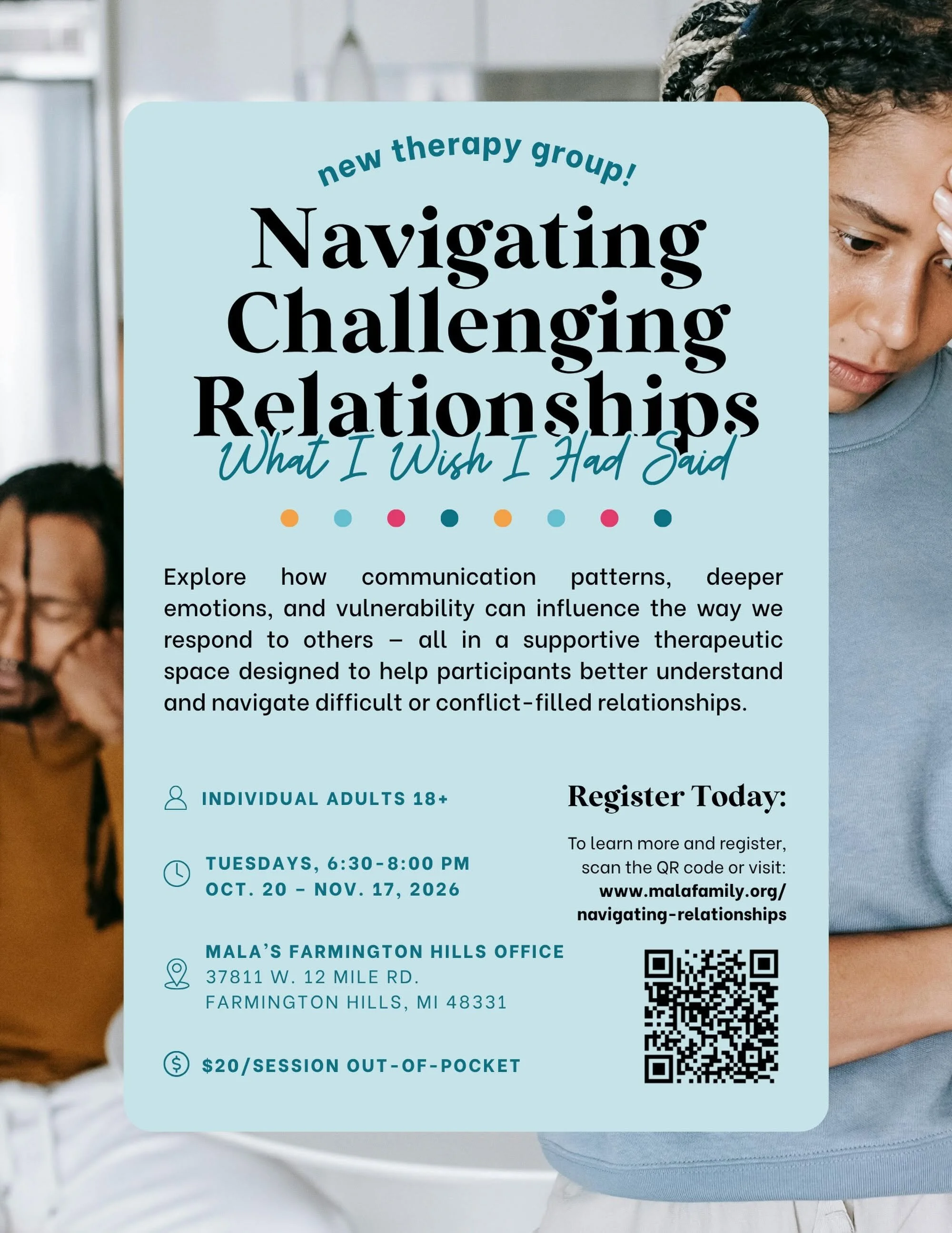
Groups Focused On Connection, Bonding, and Relationships
If you have any questions concerning care at Mala or would like to reach out for another reason, we’d love to hear from you.
Until next time,
The Mala Child & Family Institute Team
