When You Have Both ADHD and OCD
When You Have Both ADHD and OCD
October is ADHD Awareness Month and OCD Awareness Week
By Dr. Hasti Raveau, PhD, LP
Clinical Psychologist, Founder, & CEO
Imagine trying to send an email.
First, you forget to send it. Then you remember, open it, notice another email, and somehow end up researching something that was absolutely not on today’s agenda.
Eventually, you return. Now you’re rereading “Sounds good!” to decide if it sounds hostile. Should there be an exclamation point? Two feels unstable. A period feels like you’re firing someone. After you send it, you realize you got the person’s name wrong.
For some people with both ADHD and OCD, this kind of situation feels familiar. And others experience something entirely different. But almost nobody’s life resembles the stereotypes we’ve assigned these conditions.
Apparently these two did not get the memo.
I don’t know why people assume ADHD and OCD cancel each other out. Maybe they think one makes you disorganized, and the other makes you organize everything. Sadly, OCD is not a complimentary housekeeping service.
ADHD involves difficulties with regulating your attention and can make it very hard to stay organized, follow through on tasks, and control your impulses. OCD involves intrusive, unwanted experiences and/or compulsions that cause distress or interfere with life. Compulsions can include mental reviewing and repeatedly seeking reassurance (not just visible rituals).
You can have a chaotic kitchen and a very demanding internal rule about how the dishes must be washed. And repetition alone does not establish OCD. The important questions are what drives it, how distressing it is, and how it affects your daily life. OCD can also consume attention in ways that look like ADHD, which makes careful assessment very important. Sadly, many people have little awareness, and do not even realize they are struggling with these symptoms.

The same behavior can need a completely different response.
Take unfinished homework. A child might lose track of the instructions, or keep restarting because something feels wrong, or do both. “Try harder” does not help. Ask: “What happens when you try to start?” and “What makes it hard to stop?”
In adolescence, you see it in a group chat or an assignment checked repeatedly but never submitted. In adulthood, it might be work, bills, parenting, or an email undergoing its seventh legal review even though it is not a legal document. A reminder may help someone return to an assignment, but it will not help them resist a compulsion to redo it.
I know this from both sides of the therapy room.
I was 30 when I received my ADHD and OCD diagnoses. I had already spent years seeking psychotherapy. I was asking for help, but the care wasn’t specific enough to what I needed.
It was a marriage counselor working with my ex-husband and me who recognized some of my OCD tendencies and encouraged a proper evaluation. I went to the Ann Arbor Center for Anxiety and OCD because I trusted their specialization. The psychologist met with me over multiple sessions before finalizing the diagnosis. Treatment was thoughtful about my trauma history and ADHD.

Looking capable is not the same as feeling okay.
We all know that girls and women are very good at making difficulties less visible. Research shows that compensatory strategies, gender expectations, and less obvious ADHD symptoms contribute to missed recognition. What we tend to see is that anxiety or depression get attention while ADHD is overlooked.
So yes, someone can get good grades, have a career, and remember everyone’s birthday.
But we still need to ask how much work that takes. Can they rest? How long do ordinary tasks take? What happens after everyone else goes home?
Research has documented racial disparities in ADHD diagnosis and barriers to OCD treatment, including concerns about discrimination. As an Iranian-American woman and psychologist, I want providers to ask what someone is actually living through. Chronic systemic stress belongs in that conversation.
Treatment needs more than excellent intentions.
For OCD, exposure and response prevention (ERP) is a well supported treatment. The provider helps you practice contact with your triggers while resisting the compulsions used to neutralize distress. I used to constantly have thoughts that an intruder was hiding in my closet, waiting for me to fall sleep to kill me. I would neutralize this was having my back against the wall, staring at the closet door, keeping my lights on, or keeping my closet door always open. In ERP, I had to keep the closet door closed, lights off, and keep my back turned away from the closet door as I laid in the bed waiting to fall sleep. But if you think that was the worst of it, it wasn’t. I had to repeatedly say “maybe there is an intruder in the closet, waiting to kill me, maybe not, I can deal with the uncertainty”.
Medication, commonly an SSRI, may also help. ADHD care can include medication, practical skills interventions, and age-appropriate support at home and school. My practical recommendation is clear instructions, manageable practice steps, and reminders when useful. Occupational therapy can be a particularly helpful resource for teens and adults.
Medication deserves thoughtful monitoring. Reports of stimulants worsening OCD exist, but the evidence is limited and largely anecdotal; other reports describe improvement with ADHD treatment. There is no universal medication sequence for everyone with both conditions.
Parents do not need to become detectives with clipboards.
You can start by noticing patterns. What happens before the child gets stuck? What do they say feels hard? What happens when they try to move on? Then bring those observations to someone with expertise. Just remember that children may be embarrassed by OCD or struggle to explain it.
A few useful next steps:
Ask specifically about ERP experience. “Do you treat pediatric OCD, and how do you adapt care when ADHD is also present?”
Keep practical help. Organizing materials can support ADHD. Repeatedly checking them to guarantee nothing bad will happen may become part of OCD.
Get guidance on reassurance. Repeated certainty-seeking can pull families into rituals. Work with the therapist on gradually reducing that participation while staying warm and supportive. This is not a sudden household ban on answering questions.
Coordinate school support. Review what each strategy is meant to address. More time may help with attention needs but can sometimes become more time spent checking.
Notice effort beyond the finished product. Starting with support or resisting a ritual according to the treatment plan can be meaningful progress.

We can laugh and still take this seriously.
There is something absurd about a brain that cannot locate the permission slip but would like to reopen an investigation into your tone at dinner. The lost permission slip may be funny, but the distress deeply deserves care.
October’s ADHD Awareness Month and OCD Awareness Week are a chance to make room for the real experiences: messy, private, sometimes ridiculous, often painful. At every age, people deserve support that understands both conditions.
And if your response is “Well, everyone does that sometimes,” just remember that everyone pees, too. Frequency, urgency, and how much it disrupts your day are rather important details.

Upcoming Events at Mala
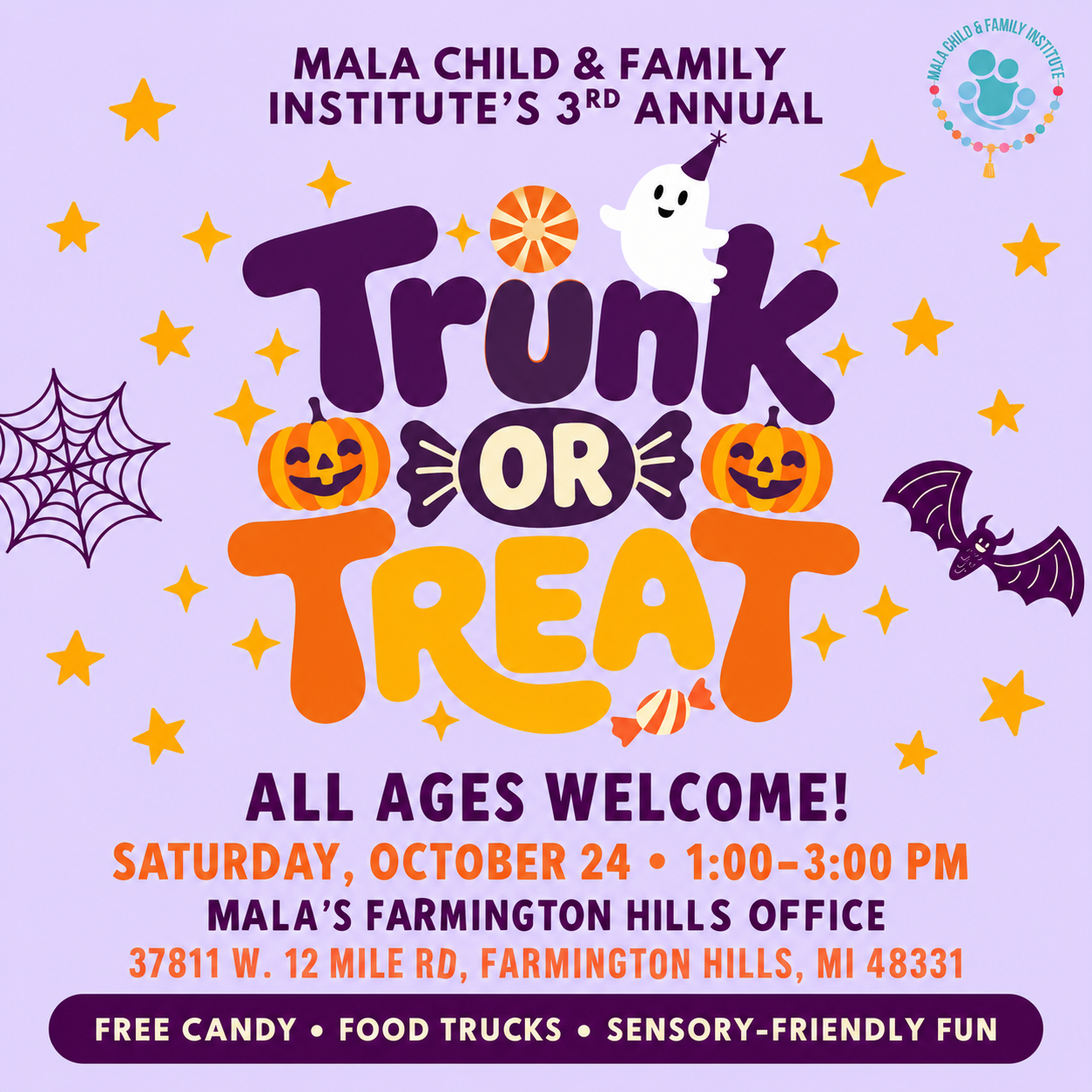
Bring the whole family to Mala’s Farmington Hills office for an afternoon of Halloween fun, community connection, and sensory-friendly activities!
Kids of all ages are invited to come dressed in their favorite costumes, collect plenty of candy, and enjoy a welcoming, family-friendly atmosphere.
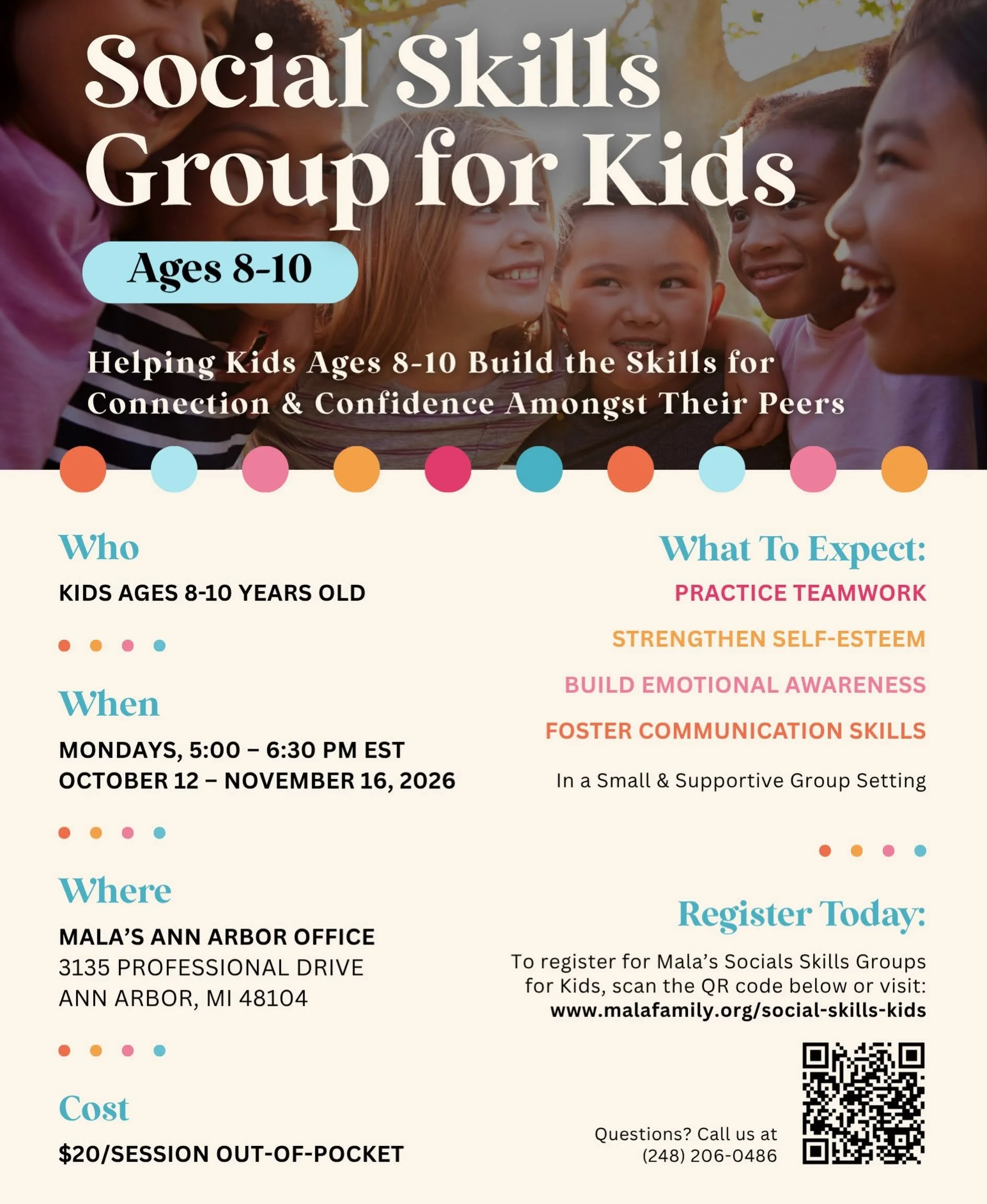
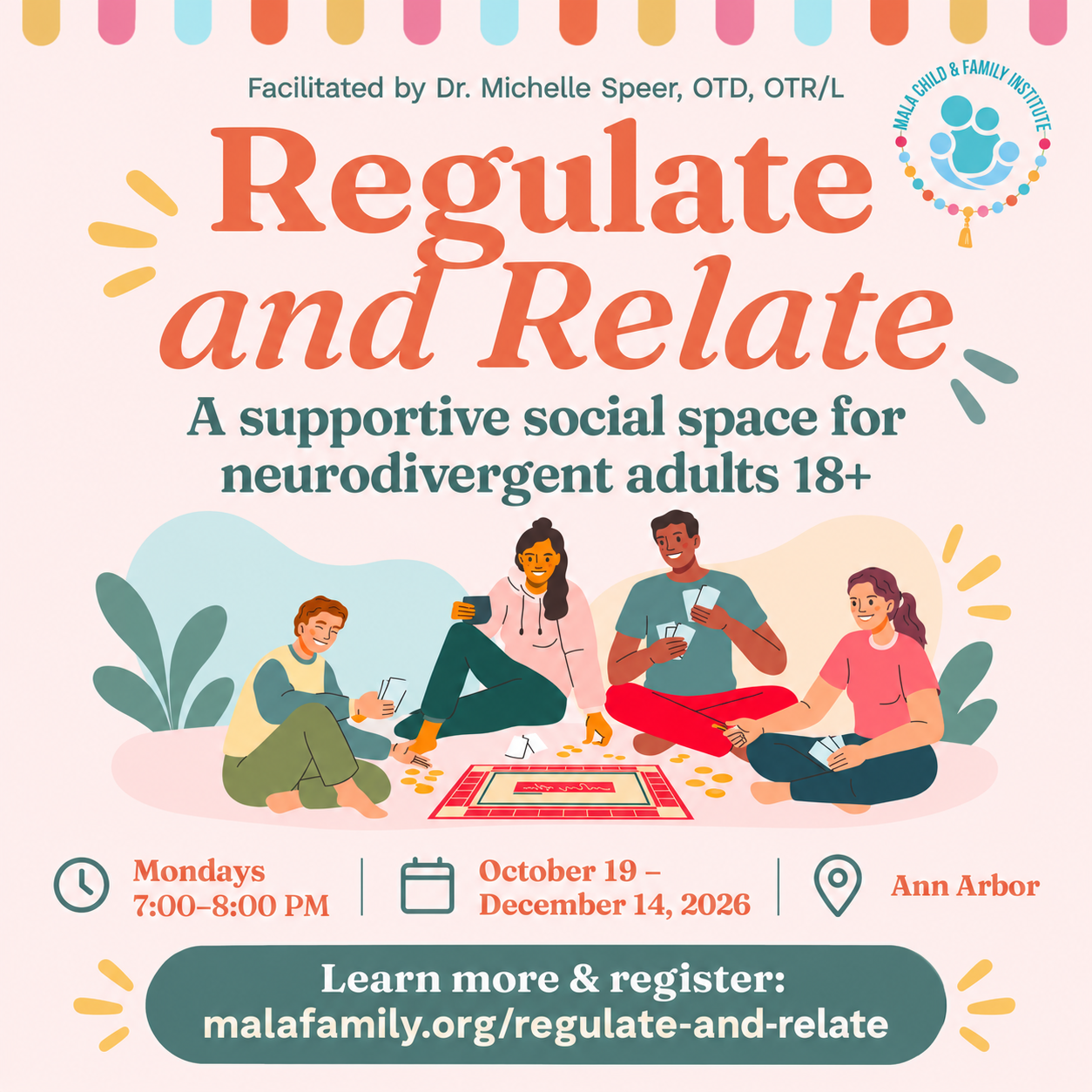
Upcoming Therapy Groups

If you have any questions concerning care at Mala or would like to reach out for another reason, we’d love to hear from you.
Until next time,
The Mala Child & Family Institute Team
