
How to Heal From Betrayal Without Losing Yourself
How to Heal From Betrayal Without Losing Yourself
By Dr. Hasti Raveau, PhD, LP
Founder & CEO

Betrayal is one of the most universal human experiences. When it happens, it feels so personal it can really destabilize us. Maybe that’s because betrayal isn’t about the actions that happened “out there” but about what happened inside of us in the most tender places that make us human.
Since I can remember, I was always told that I trusted too easily and loved too freely. Sure, this makes me more vulnerable to be betrayed, but I have always believed in seeing the good in others. At times I wondered if this mindset gave me illusion of safety, but deep down I think I really have faith that there is love and light in all of us.
Recently, I felt betrayed by people who, over the years, relied on me for support, guidance, or resources, yet chose to spread lies about me for their own benefit. As I sat with the wound this past week, feeling raw and sad, I realized the hurt was the sudden loss of a relationship I believed was rooted in goodness and mutual respect. And like every betrayal, it stirred up an entire inner world for me.
Why Betrayal Hurts So Much
As humans, we have these complex internal emotional landscapes that start reacting at the same time when trust is broken:
A younger part in us feels confused, abandoned, and ashamed: “Why wasn’t I worth protecting?”
Another part of us tries to replay the timeline over and over: “Maybe if I understand every detail, I’ll make sense of this.”
A protective part gets angry: “No one gets to treat me like this again.”
And another part questions our worth: “Did I miss something? Was I too trusting? Am I to blame for this?”
Each part tries its best to protect us. Some of us use anger, others use withdrawal or overthinking. Some lash inward. Some lash outward. This is why betrayal can somehow make us feel both fragile and on fire.
These emotions exist because our sense of safety, our trust in another person, and our belief that our vulnerability would be held gently felt violated. This is true regardless of how old we were when the betrayal happened. And when it intersects with identity (as it happened for me), the wound shakes not just who we are, but the lineage we come from.
The Times We Turn Against Ourselves

I think we often over-focus on how others have betrayed and under-focus on the ways we betray our own spirit. We stay silent to avoid conflict, forgive too quickly so we don’t feel discomfort, or make ourselves small so we don’t inconvenience others. We often give more than we receive, trust people repeatedly who show they cannot hold us, and take responsibility for someone else’s choices
Self-betrayal is often a younger part of us still trying to survive by saying things like:
“If I stay quiet, they’ll love me.”
“If I accommodate, they won’t leave.”
“If I make myself small, I’ll be safe.”
I encourage all of us to consider what if when betrayal happens, these parts of us come roaring to the surface to be healed? And the quiet and compassionate wisdom inside our own spirit says: “You can rise from this without hardening. You can protect yourself without losing compassion for yourself and the other person. You can learn without losing who you are.”
How Do We Move Forward?

1. Listen to every part of yourself with acknowledgment, not judgment.
Place your hand on your chest and name what you feel out loud. Naming without correcting yourself signals safety to your nervous system.
2. Offer compassion to every inner voice.
Write a 3-sentence note to each emotion. “Anger, I hear you. You’re trying to protect me. I won’t shut you down.”
3. Release what is not yours to hold.
Imagine placing the other person’s actions or words into a box and gently sending that box away on a stream. Repeat: “This is not mine to carry.”
4. Notice urges without acting on them.
When an urge arises (texting, confronting, spiraling), set a timer for 90 seconds and breathe.
Most urges lose their intensity within that window.
5. Think flexibly about yourself and the other person (without excusing harm).
Say this grounding statement: “Their behavior came from their wounds. My reaction came from my hope. Both can be true.” Write one thing you learned about them and yourself.
6. Stop the obsession to ‘figure it out.’
Give your mind a job so it stops digging. Focus on your breath. When your brain wanders back to the betrayal, gently say: “Not right now. I’ll tend to you later.”
7. If you were truly victimized, honor that truth.
Write this affirmation somewhere visible: “What happened to me was not my fault. How I rise next is my power.” Then choose a supportive act (call a friend, take a walk, drink water, journal).
A Prayer for Betrayal Healing
May I return home to myself with tenderness.
May the parts of me that shake be held in love.
May I see my worth clearly again.
May I release the burdens that are not mine to carry.
May I grow wiser without growing bitter.
May I protect myself without closing my heart.
May I rise with dignity, strength, and compassion.
And may I find peace not by changing another’s behavior, but by choosing my own healing.


Common Forms of Betrayal We Don’t Recognize
Below are some of the most common forms of betrayal that often go unnamed but leave a deep imprint on the heart.
In Family Systems:
Our memories were denied or rewritten.
Silence and image mattered more than truth.
We were assigned roles (hero, scapegoat, peacemaker) rather than seen as ourselves.
We had to emotionally care for adults.
Unsafe relatives were protected.
Our needs threatened the family narrative and were silenced.
In Childhood:
Our feelings were dismissed, minimized, or mocked.
We were punished for honesty.
Caregivers repeatedly made promises they didn’t keep.
Adults confided in us about their struggles.
Affection depended on our performance, behavior, or mood.
We were pushed to override our bodily discomfort.
Sibling cruelty was normalized.
Our vulnerabilities became entertainment.
At Work:
Leaders took credit for our work.
Honesty was welcomed until it threatened someone’s ego.
Information was withheld to make us fail.
An organization’s actions betrayed their stated values.
We became the emotional support person for the whole team.
Confidentiality was violated.
Allyship was performative instead of real.
In School:
Friends excluded us without explanation.
Adults witnessed bullying and chose not to intervene.
Teachers shamed us publicly.
Peers shared our secrets for attention or status.
We were included only when convenient.
Advocating for our needs led to labeling or retaliation.
In Adult Friendships & Relationships:
People showed up only when they needed something.
Our needs were minimized or labeled “too much.”
Friends vanished during our hardest seasons.
Our vulnerabilities were shared without consent.
Partners weaponized our past.
Our growth triggered resentment instead of celebration.
Emotional intimacy was cultivated elsewhere but dismissed as innocent.
Boundaries were mocked, punished, or ignored.
Newest Providers!
Now Accepting New Clients
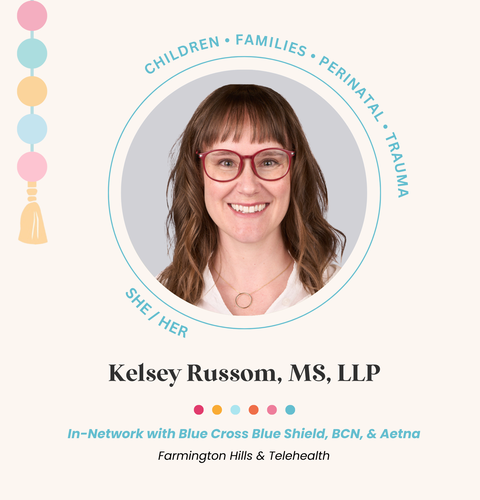
We’re thrilled to welcome two incredible clinicians to the Mala family, both with immediate openings for new clients of all ages!
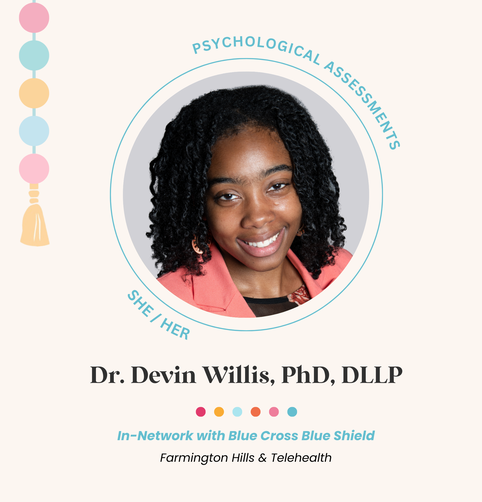
Dr. Devin Willis, PhD, DLLP has committed to using psychological assessment as a tool for assisting individuals on the journey to self-knowledge.
Kelsey Russom, MS, LLP specializes in supporting children and teens navigating anxiety, depression, and ADHD, women and mothers, and those with a history of trauma.
Autism Testing Now Available at Mala!
Understanding yourself or your child more deeply can be a powerful step toward clarity and support. We offer evidence-based autism evaluations for children, teens, and adults in an environment that honors each person’s dignity, communication style, and lived experience. Whether you are seeking answers for sensory differences, social-communication patterns, attention challenges, or a lifetime of feeling “different,” our goal is to help you make sense of your story with care and accuracy.


Compassionate Medication Support for Emotional Balance
Living with anxiety, mood shifts, attention challenges, or ongoing overwhelm can make daily life harder than it needs to be. Our practice offers warm, collaborative medication management for children, teens, and adults seeking steadiness and support. Whether you’re exploring medication for the first time or looking for a provider who truly listens, we create a validating, individualized space to understand what you need. When combined with therapy and lifestyle supports, medication can be a meaningful tool to help you feel more regulated and in control so you can move through life with greater clarity and ease.
If you have any questions concerning care at Mala or would like to reach out for another reason, we’d love to hear from you.
Until next time,
The Mala Child & Family Institute Team
