What Our Kids Are Hearing — and What They Need From Us Right Now
What Our Kids Are Hearing — and What They Need From Us Right Now
A Non-Political Post
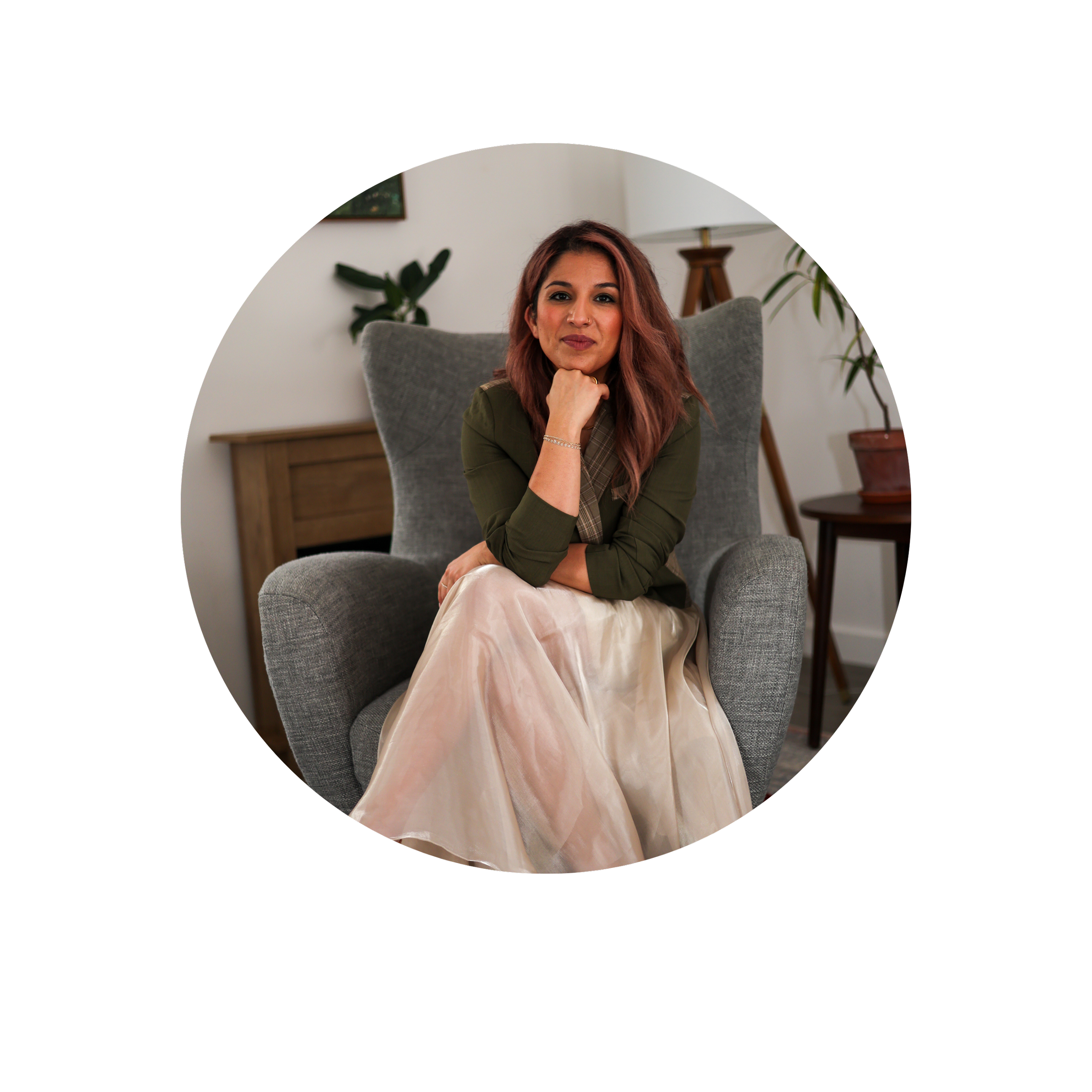
By Dr. Hasti Raveau, PhD, LP
Clinical Psychologist, Founder & CEO

Dear Mala community:
I’m writing this as a mom first, and as a clinical psychologist second.
Over the past several weeks, Our providers have been hearing the same thing from parents, teachers, and kids themselves: children are talking about immigration raids, deportations, and arrests.
They’re hearing it at school. They’re hearing it from other kids. They’re seeing clips and videos on phones and social media, often without context, accuracy, or adult support.
Some kids are scared, and some don’t fully understand what they’re seeing, but their bodies still feel the fear. Even when adults try to protect them, this information is circulating.
This isn’t a political post. I’m not here to tell anyone what to believe or where to stand. This is about something much more basic and important to me:
How we protect children’s mental health in a world that feels loud, confusing, and scary.
Big Feelings Are Not Weakness
Crying is not weakness. Feeling emotional is not a failure.
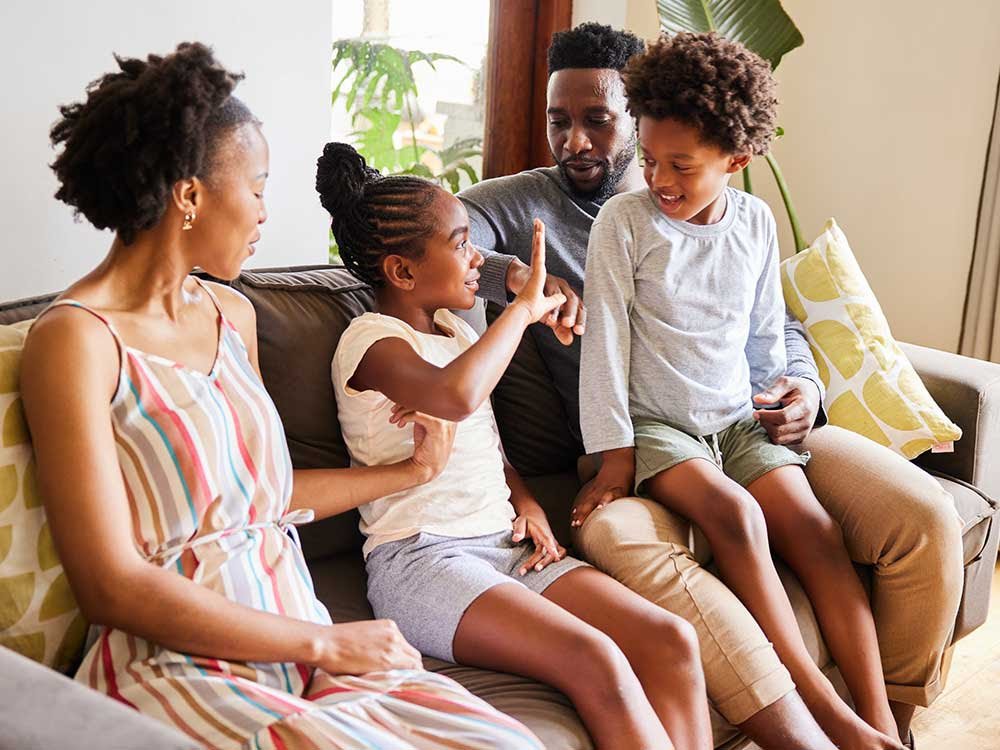
Kids are allowed to feel sad, scared, angry, confused, or overwhelmed. What matters is whether kids know what to do with them. Humans were never meant to ride emotional waves alone. We are wired for co-regulation. For support. For being held by other people.
One of the most important things we can teach kids is how to use their resources. That means showing them how to:
Write things down with an actual pen and paper
Talk to a therapist and trust the process
Open up to teachers, coaches, counselors
Ask for help before feelings turn into isolation or panic
I often tell kids: “Big feelings mean something matters. Let’s figure out who can help you hold this.”
Resilience doesn’t come from being tough. It comes from knowing you don’t have to be alone.
We Teach Most By How We Live
We say we want our kids to grow into adults who think critically, care about humanity, tolerate disagreement, and value learning and compassion. But kid learn those things by watching how we treat each other at home.
Do we allow disagreement without control or harm?
Do we repair when we mess up?
Do we make space for hard conversations, or shut them down when they feel uncomfortable?
And just as importantly: what are we feeding ourselves? The media we consume. The tone of our conversations. The way we show up under stress. All of it shapes our children’s nervous systems.
If I could urge one thing above all else, it would be this:
Tend to the emotional climate of your home first.
It has more ripple effects than anything else we can do.
A Note To The Aunts, Uncles, & The Village
This part is for the adults who are not the primary caregivers: the aunts, uncles, grandparents, close friends, neighbors, chosen family.
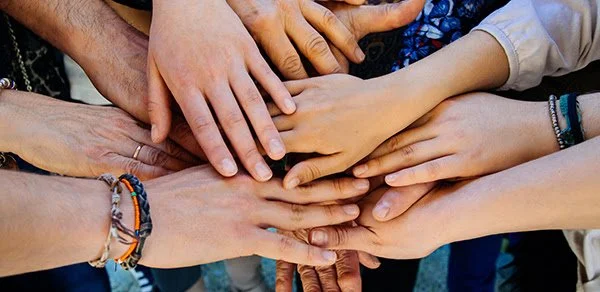
You matter more than you know. This is your moment to step into active caregiving. To be the lily pads where parents and kids can rest.
That might look like bringing a meal.
Doing the dishes.
Watching the kids for an afternoon.
Driving them to practice.
Walking the dog.
And during those moments: build real relationship. Listen. Be present. Become one of the adults a child knows they can turn to. Children do best when they are surrounded by many safe people. Caregiving was never meant to be done alone.
Teaching Kids To Protect Each Other
Kids are not just passive consumers of information. They’re members of a community. We can teach them that:
If something scares them, they should go to a trusted adult, not carry it alone or spread it to peers.
Not everyone needs to see everything.
Sharing graphic or frightening content can hurt someone else.
You might say:
“Fear spreads fast, but care can too.”
“Protecting each other matters.”
Children and teenage brains, in particular, are vulnerable to trauma exposure. Teaching kids to pause, to be mindful, and to look out for each other is community care.
Why I am Worried About Social Media
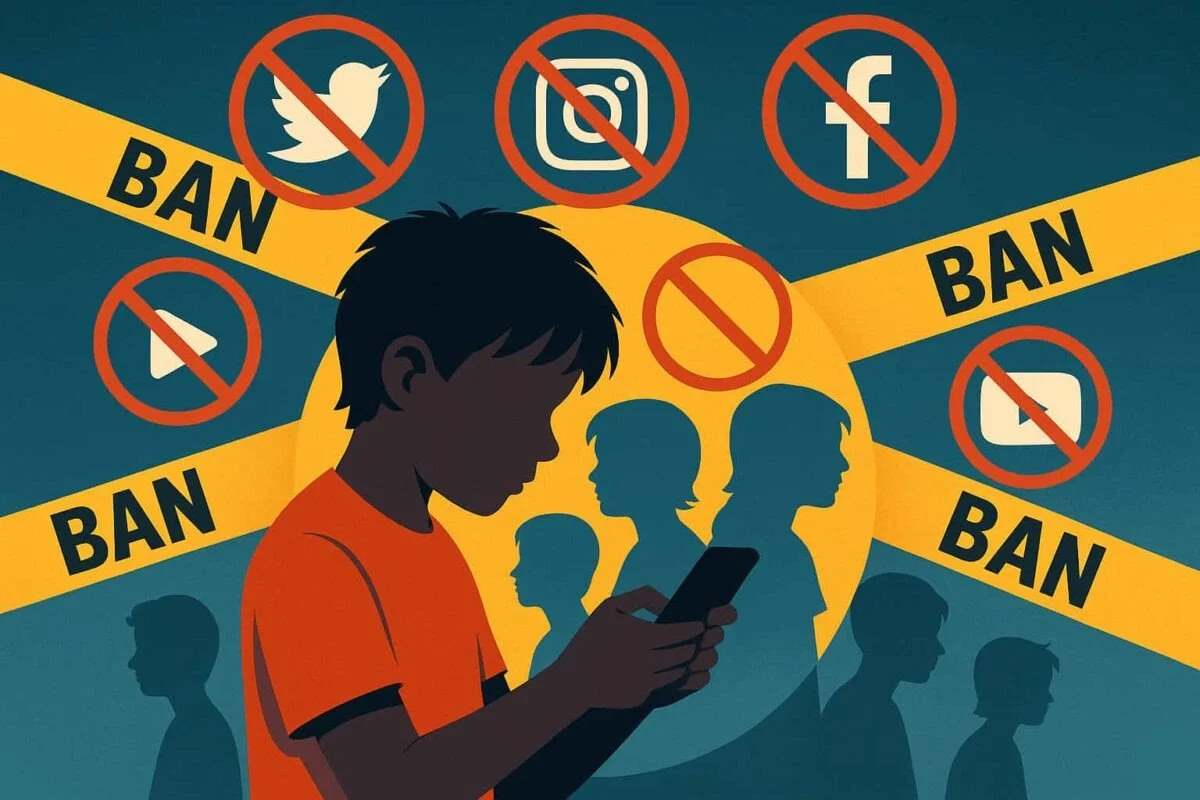
I’ll say this plainly, because dancing around it hasn’t helped anyone: social media is not neutral for kids.
As a psychologist, I see what it does to attention, anxiety, sleep, self-esteem, and emotional regulation. I see how fast fear spreads when kids are exposed to content without context, safety, or adult guidance. Some countries have already passed laws restricting social media for kids under 16. These platforms were not designed with child development in mind.
If you’re thinking about reducing or ending social media use in your home, you don’t need to do it through power struggles or panic. You can do it with honesty and care.
What I tell parents (and use in my own home):
For younger kids:
“Some things online are made for adult brains, not growing brains. My job is to protect your brain while it’s still building.”
For tweens and teens:
“I’m not trying to control you. I’m trying to protect your nervous system. Let’s figure this out together.”
Start with curiosity. Ask what they’re seeing. Ask how it makes their body feel. Reduce exposure before you eliminate it. Create tech-free spaces. And if you need to take a full break, explain why, and make a plan to revisit it later.
Kids do better with limits when they understand the why.
We can’t control everything happening in the world. But we can do our best to protect children. If your family needs support navigating these conversations, you’re not failing, and you’re not alone.
I’m holding all of you with care.
Mala’s Upcoming Therapy Groups
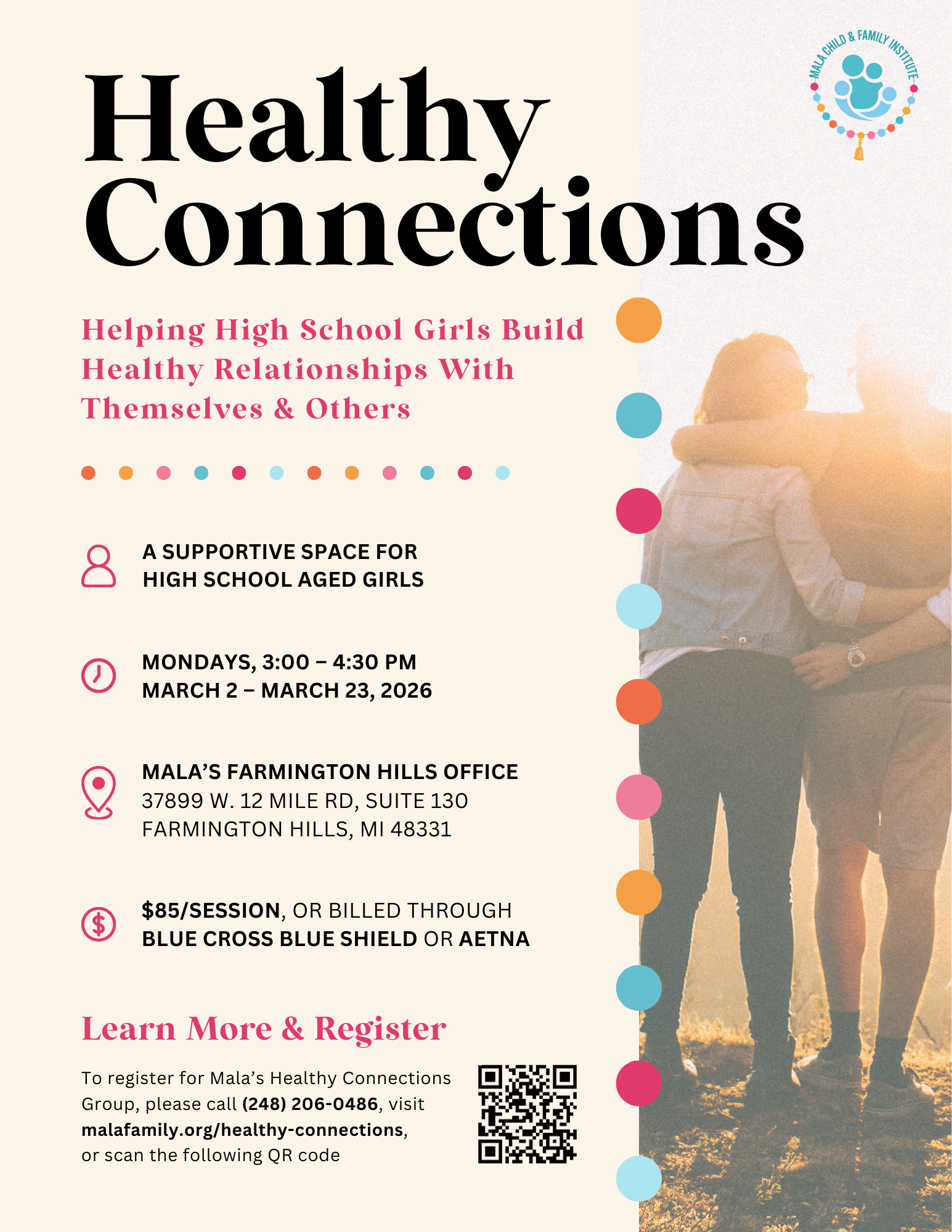
Healthy Connections
Mondays, 3:00-4:30 PM
March 2 – March 23, 2026
Mala’s Farmington Hill’s Office
$85/session, or in-network with BCBS & Aetna
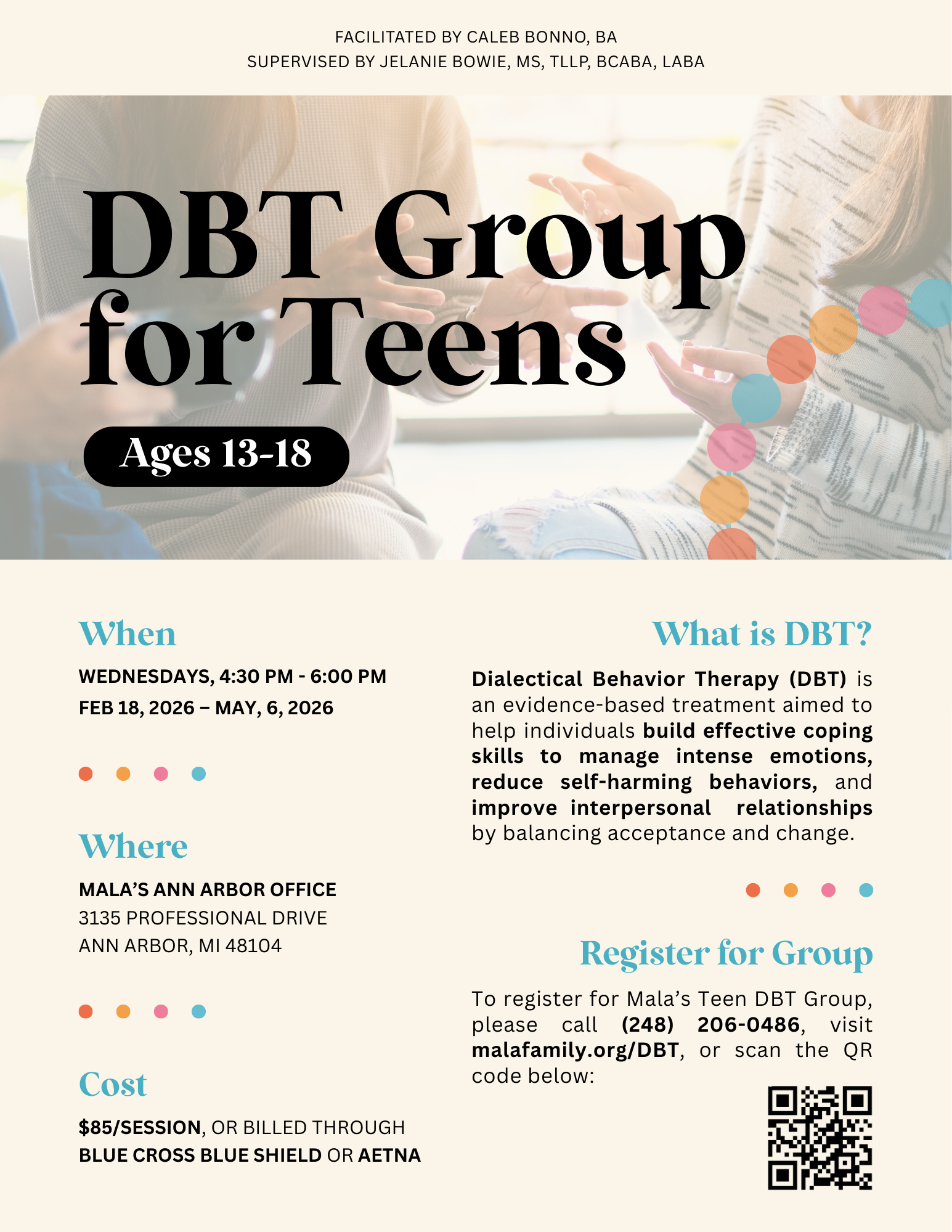
DBT Group for Teens
Wednesdays, 4:30-6:00 PM
February 18, 2026 – May 6, 2026
Mala’s Ann Arbor Office
$85/session, or in-network with BCBS & Aetna
If you have any questions concerning care at Mala or would like to reach out for another reason, we’d love to hear from you.
Until next time,
The Mala Child & Family Institute Team
