
Humanistic Psychology: Understanding the Person-Centered Approach
By Meret Flessenkamper, MA
Master’s Level Clinical Psychology Practicum Student
When I got my graduate degree in Clinical Psychology in Switzerland, I was only barely aware of the multitude of approaches that psychologists employ with their clients. I was classically trained in an approach that is called cognitive behavioral therapy (CBT). This approach is very well-backed by science since it is an approach that is easily studied, thanks to manualized approaches and protocols. However, there is little mention of what happens in the therapeutic space with clients, apart from educating them on their symptoms and teaching them skills.
What is Humanistic Psychology?
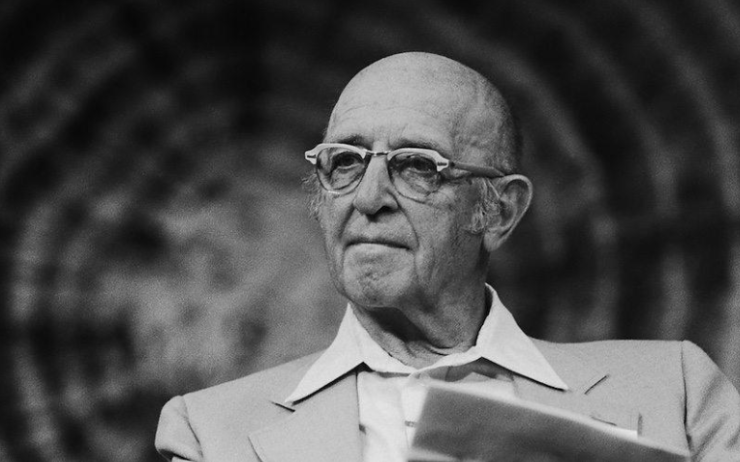
Now that I am getting my second graduate degree in Psychology in Michigan, I am in a program that is training us to be humanistic psychologists. Humanistic psychology, also called person-centered psychology, is an approach pioneered by Carl Rogers (pictured). He believed in the good that is inherently present in all people. I believe he was right. Let me walk you through what humanistic psychotherapy focuses on.
First and foremost, we as therapists are urged to recognize that all people are unique in their experience. This will automatically help us stay humble in our interactions with clients. Secondly, we look at the whole person in front of us, and meet the client as a fellow human, rather than a “patient to be cured”. Humanists believe that every person strives to fulfil their needs and when those needs are met, ultimately for the fulfilment of their potential. That may sound like a lofty goal, but have you ever felt compelled to seek out a challenge, take a new class, learn a new skill or broaden your horizon in some way? You may be striving to fulfill your own unique potential! Striving to grow as a person can sometimes even feel a little daunting. There may be initial resistance or discomfort at the idea of changing it up – that is normal and human. Humans generally don’t like change, we prefer the predictability of our familiar circumstances. A familiar environment can feel more safe to our minds and bodies – even if we are limiting ourselves or stuck in some ways. Rogers is famous for saying,

“The curious paradox is that when I accept myself just as I am, then I can change.”
He means that a person needs to accept themselves in the present moment, as an imperfect version of themselves in order to change. Therefore, the more you force yourself into changing, the harder it will get. Lasting change is not achieved overnight, but won bit by bit, as you learn to find freedom within yourself as an imperfect person.
Like my fellow humanists, I focus on a person in the here-and-now. It can be really helpful to look at the present moment and bring awareness to what is happening right now in the therapy space. This may seem like an obvious choice of what to focus on, but a lot of previous pioneering therapy styles have had an interest in mostly exploring the past (which still can be helpful and a valid approach). This focus on the here and now goes hand-in-hand with tools like mindfulness, or meditation. They help people to bring some distance between themselves and their automatic thoughts. That space that is created can be the opportunity to stop and decide to take a different course of action, rather than automatically repeating behaviors.
Being aware of your own thoughts, choices and actions can also bring up feelings of shame or judgement—and as a humanistic therapist, it is my job is to make you feel that you are still a valuable person. Unconditional positive regard of a therapist can help their clients recognize that they are having normal human reactions, that a lot of the time, the reactions make sense when you look at the circumstances that someone finds themselves in. Humanists believe that people want their actual self and their ideal self to largely overlap. If there is a discrepancy between the two, a person will feel distressed and want to repair the fracture in congruence between who they are and who they want to be as a person. To explore these existential questions, therapists can help you look at your own values, and the beliefs that help guide you through life.
References
Bugental, J. F. T., & Bugental, E. K. (1996). Resistance to and fear of change. In The Hatherleigh guide to psychotherapy (pp. 33-46). Hatherleigh Press
D'Souza, J., & Gurin, M. (2016). The universal significance of Maslow’s concept of self-actualization. The Humanistic Psychologist, 44(2), 210-214. https://doi.org/10.1037/hum0000027
Jacobsen, B. (2007). Authenticity and our basic existential dilemmas. Existential Analysis: Journal of the Society for Existential Analysis, 18(2), 288–296.
Rogers, C.R. (1961). On becoming a person. Houghton Mifflin.
Thompson, B. J., & Vivino, B. L. (2014). Am I a person-centered therapist? Psychotherapy Bulletin, 49(4), 18-21.
If you have any questions concerning care at Mala or would like to reach out for another reason, we’d love to hear from you.
Until next time,
The Mala Child & Family Institute Team
