
Ending 2025 With Radical Honesty
Ending 2025 With Radical Honesty
By Dr. Hasti Raveau, PhD, LP
Founder & CEO
As the year closes, many of us feel the pressure to sum it up and decide whether we “did enough,” grew enough, healed enough.
But ending a year with radical honesty often brings grief before it brings clarity.

Grief for unmet expectations.
Grief for promises we made to ourselves and didn’t keep.
Grief for versions of ourselves we thought we’d be by now.
Grief for goals that stayed ideas instead of becoming reality.
And because our brains are wired for survival, this review process quickly turns harsh.
Why Radical Honesty Is So Hard (& Why We Still Need It)
From a neuroscience perspective, the human brain has a built-in negativity bias. Research consistently shows that our brains prioritize threat detection, problem spotting, and error correction because this keeps us alive. Modern research confirms this:
Negative experiences are processed more deeply and remembered more vividly than positive ones, even when positive experiences are more frequent.
Chronic self-criticism activates the brain’s stress response, increasing cortisol and impairing emotional regulation and motivation over time.
So when we sit down to review the year, our nervous system often interprets that task as danger, not reflection. And yet, we still need the kind of honesty that clarifies.
The Difference Between Self-Criticism & Radical Honesty
Radical honesty is precise.
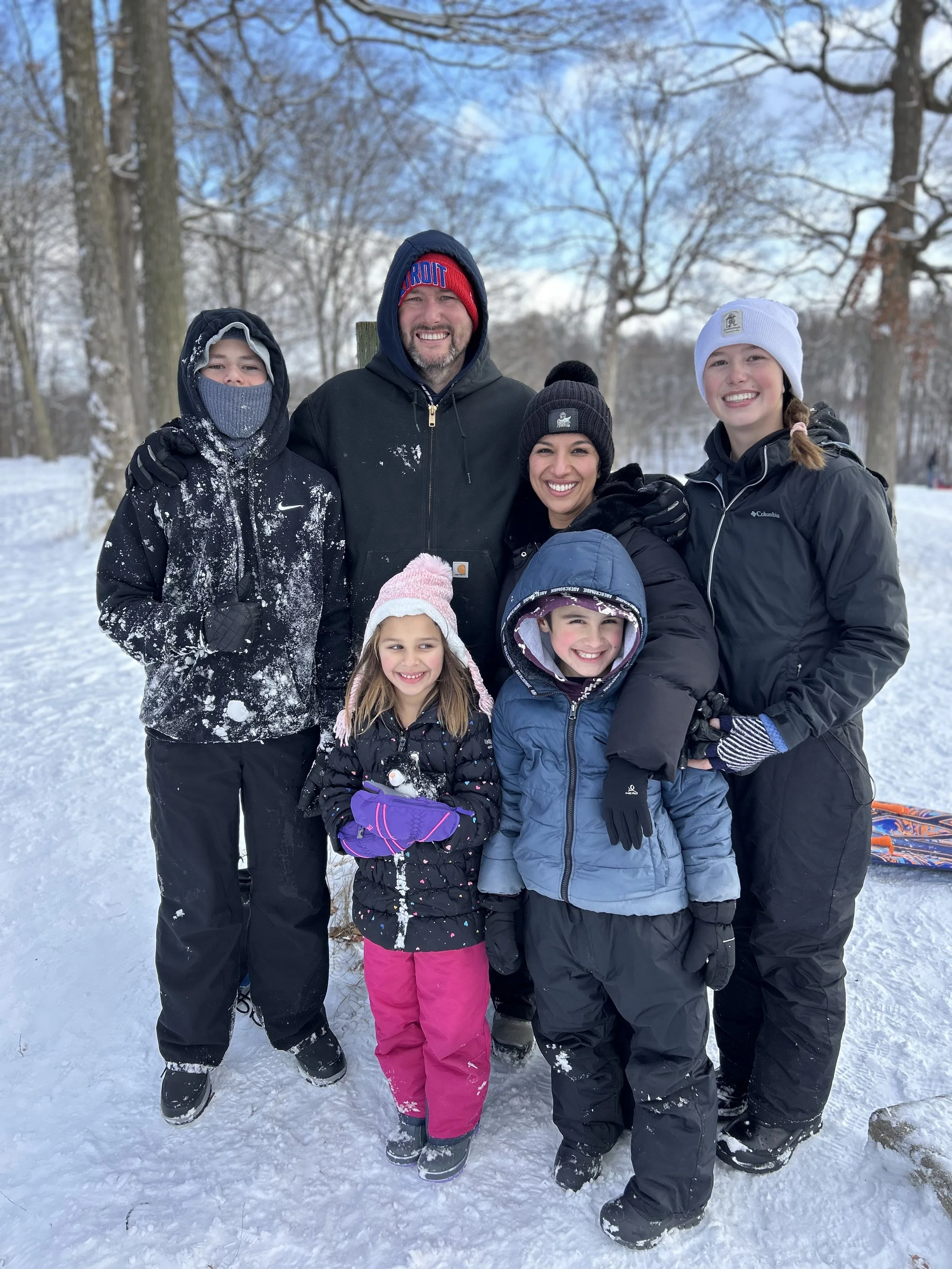
Here’s an example from my own life: In 2025, I did a poor job getting my heart rate up consistently. That’s just a fact.
I ate well, slept enough, and spent more time outside. But cardiovascular exercise didn’t happen much. Many people would jump straight to: “I wasn’t disciplined.” Maybe, or maybe not.
Because radical honesty requires context: 2025 was a year of big transition for my family. I got remarried. I became a step-parent to two teenagers. My children entered a blended family. My neurodivergent child’s school closed down, and we had to find a new school. Creating emotional safety, predictability, and stability was a priority.
And here’s another honest truth: That investment worked. If you met our family today, you’d assume we’ve been doing this for years. That happened because energy is finite, and I chose where to spend it.
So yes, my fitness goals stalled. And I’m proud of myself anyway. Now that stability exists, I can return to my health goals in 2026.
This is what strength-based radical honesty looks like:
Nothing is denied. Nothing is sugar-coated. Nothing is flattened into self-blame.
Holding Multiple Truths at the Same Time
When people learn how to hold emotional complexity, which is the ability to experience mixed emotions simultaneously, they also show greater resilience, better decision-making, and stronger long-term mental health.
A few of my close friends went through different forms of loss this year. Watching people you love grieve is deeply painful. But I practiced making space for the grief, fear, AND for their courage, growth, and for the ways they showed up for themselves despite the pain. I found this meaning-making rather than avoidance or forced positivity, extremely helpful. We do not want to collapse our story into a single narrative.
What Are You Actually Wanting More Of?
As you close out 2025, you might be longing for:
Deeper sense of spirituality
Deeper, safer relationships
Greater financial stability
A more organized life
Better health
Or simply knowing your children are developing the life skills they need
Step 1: Dissect—Don’t Globalize
Instead of “I failed this year,” ask:
What specific area didn’t move the way I hoped?
What did move forward?
“I drank more alcohol than I intended to this year, especially during social events and stressful weeks. At the same time, I became more aware of when I drink and I did have long stretches where alcohol wasn’t part of my routine at all.”
Research shows that breaking experiences into parts reduces shame and increases behavioral follow-through.
Step 2: Remove the Protective BS
Notice where you soften the truth to avoid discomfort or shame, or where you exaggerate flaws to punish yourself or someone else. Neither leads to growth.
“I spent more money than I had this year. I told myself it was all necessary or deserved, but the truth is I avoided looking at my finances because it brought up anxiety and fear. Avoidance gave short-term relief, but it created longer-term stress.”
Step 3: Name One Strength-Based Truth per Area
Not a spin. Not a reframe. A real one. Strength-based reflection increases intrinsic motivation and sustained behavior change more than self-criticism.
“I didn’t show up as consistently for my body as I wanted. One strength-based truth is that I learned how to listen to my body’s limits instead of pushing through exhaustion.”
Step 4: Let Grief Exist Without Rushing It
Grief is not a sign you’re doing it wrong. It’s a sign you cared.
“I’m grieving the year I thought I’d have. I’m grieving the version of myself I hoped to be by now. I don’t need to fix that grief. I just need to let it exist.”
Step 5: Decide What Season You’re In
Some seasons are for building.
Some are for maintaining.
Some are for healing.
Trying to optimize everything at once often leads to burnout and resentment.
“This was not a season for expansion or optimization. It was a season for stabilization.”
Or:
“This was a healing season. Expecting peak productivity during it only added unnecessary shame.”

A Final Invitation
Make 2026 the year you master radical honesty that is grounded in truth, compassion, and strength.
Honesty that tells the whole story. Because only when we can hold multiple truths without distortion, do we actually move closer to the life we want.
We’re honored to walk alongside you in that work.
A Thank You, From the Bottom of Our Hearts
As we close out 2025, we want to pause and say thank you.
To the clients and families who trusted us with their stories, their children, their relationships, and their most vulnerable moments: thank you for letting us walk alongside you. Your courage, honesty, and willingness to do hard work continues to shape who we are.
To our clinicians, trainees, and staff: thank you for showing up with care, integrity, and heart, even on the days when the work felt heavy. The way you hold complexity, protect dignity, and lead with compassion is the foundation of everything we do at Mala.
To our community partners, schools, referral sources, and supporters: thank you for believing in a model of care that is relational, trauma-informed, neurodiversity-affirming, and deeply human. Your collaboration makes real change possible.
And to those who read this newsletter, shared our work, spoke our name in rooms we weren’t in, or quietly rooted for us from afar: thank you. We feel that support more than you know.
2025 asked a lot of all of us. And still, together, we grew. We learned. We stabilized. We laid foundations that will carry us forward.
We don’t take any of this lightly. We are honored to do this work, and deeply grateful to do it with you.
With warmth and appreciation,
Mala Child & Family Institute
As you step into 2026, if radical honesty has helped you name areas where you want more support, whether that’s in your mental health, your relationships, your parenting, or simply learning new skills to navigate the season you’re in, you don’t have to do that work alone.
Care isn’t a sign that something is wrong with you; it’s often a sign that you’re ready to live with more intention, clarity, and steadiness. If you’re feeling called to begin or continue your care, we invite you to click the Enroll button and take the next step. We’d be honored to support you in building the life you’re working toward.
If you have any questions concerning care at Mala or would like to reach out for another reason, we’d love to hear from you.
Until next time,
The Mala Child & Family Institute Team
