Autism Services at
Mala Child & Family Institute
Neurodiversity-Affirming Care for Children, Teens & Adults

At Mala Child & Family Institute, we provide autism-affirming, multidisciplinary care for autistic individuals across the lifespan. Our virtual and in-person services at our Plymouth, Farmington Hills, and Ann Arbor locations are designed to support the whole person.
We believe autism is a naturally occurring neurotype, not a disorder to be fixed. Many challenges autistic individuals face arise from misunderstanding, chronic stress, trauma, sensory overload, and systems that were never designed for neurodivergent nervous systems.
Our role is to help autistic individuals and families build lives that feel regulated, connected, meaningful, and sustainable.
Our Neurodiversity-Affirming Approach to Autism
At Mala, autism care is:
-
Honoring autistic identity rather than enforcing masking, and recognizing the difficulty of not living in a system with support in mind.
-
Recognizing the impact of chronic invalidation, misunderstanding, and burnout.
-
Understanding demand avoidance as a nervous system response, not defiance.
-
Supporting rejection sensitivity with compassion and relational repair.
-
Adapting care across childhood, adolescence, and adulthood.
-
Recognizing how culture, identity, and systems intersect with autism creating unique intersection and overlap of identities that affect individuals relationships to power and privilege.
We adapt our spaces, intake forms, session pacing, communication styles, and expectations to reduce sensory overload and increase psychological safety.
Autistic people should not have to work harder just to access care.
Autism Services We Offer

-
Our autism evaluations at our Farmington Hills clinic are comprehensive, respectful, and neurodiversity-affirming.
We provide autism evaluations for:
Children, adolescents, & teens
Adults seeking clarity later in life
Individuals who may have been previously misdiagnosed or overlooked
People who suspect they may be high-masking or late-identified autistic
Many people seek an evaluation because they are looking for a deeper understanding of themselves or their child, not simply a label. Our process respects that perspective and centers each person’s goals, experiences, and questions throughout the evaluation. Our evaluation process also takes masking into account and creates space for individuals to share their authentic experiences.
We assess diagnostic criteria, while also looking beyond them to better understand the whole person, including:
Sensory experiences and sensory processing differences
Emotional regulation and coping styles
Social communication and relational style
Anxiety, depression, trauma, PDA, and RSD
Executive functioning
Attention and processing differences
Learning styles and cognitive profiles
Daily living skills and adaptive functioning
Feedback sessions are collaborative and designed to be practical and validating. We focus on identifying strengths, support needs, and practical strategies that can be useful in everyday life—at school, work, in relationships, and in care planning.
Above all, our goal is for the evaluation process to be respectful, insightful, and empowering.
-
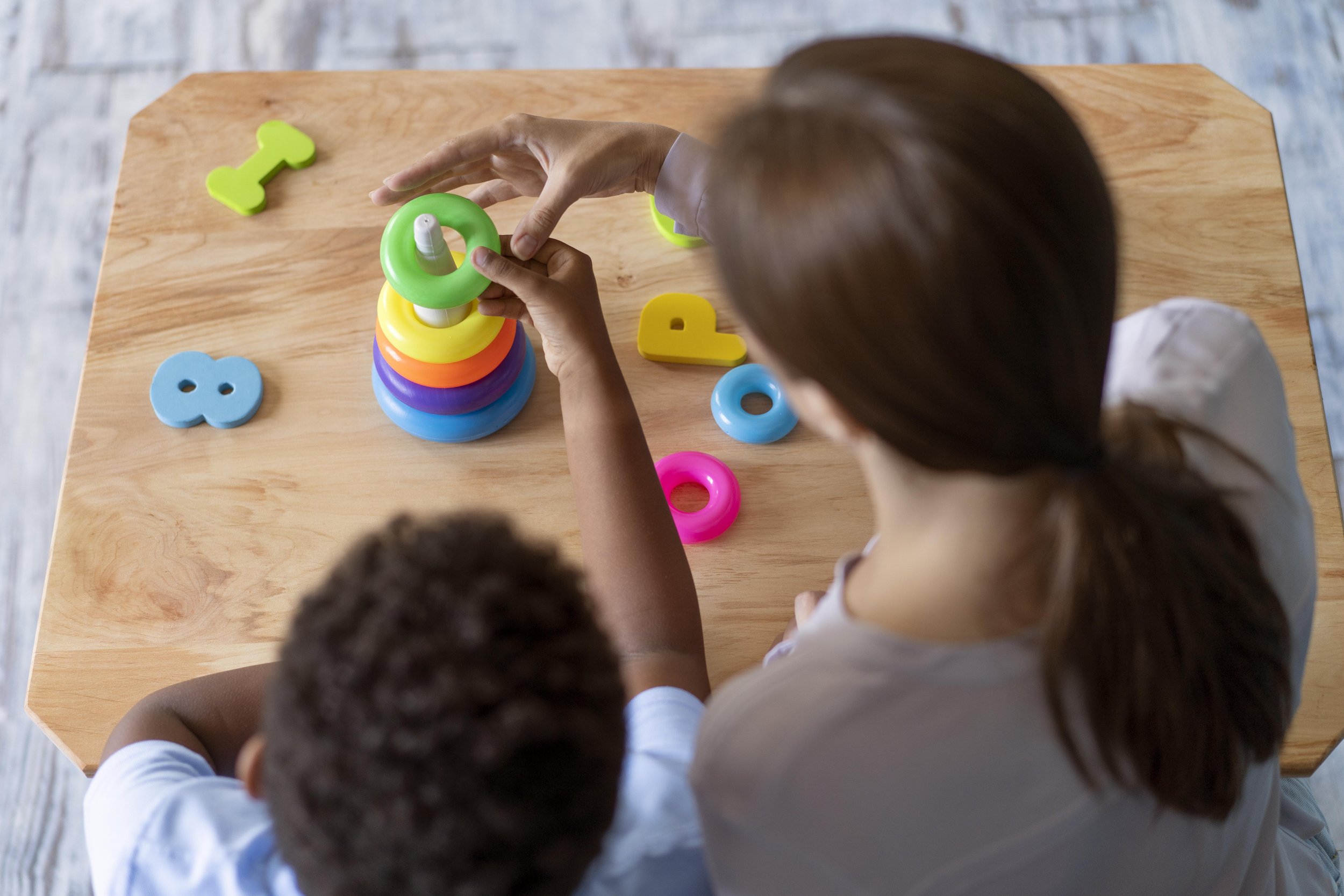
Occupational therapy is central to autism care. OT utilizes frameworks that look at an individual holistically, and challenges the environment, barriers, strengths, and supports around an individual, rather than expecting that individual to “mold” to their environment.
OT at Mala’s Ann Arbor clinic supports:
Sensory integration and modulation
Emotional regulation through movement
Executive functioning
Daily living skills
Body awareness and coordination
OT helps individuals understand what their nervous system needs, and how to meet those needs across environments.
Autistic folks deserve to be seen for their strengths, not their challenges. OT works alongside you to learn how your strengths can help you meet your goals in everyday life.

-
We support autistic children, teens, and college students navigating:
IEPs and 504 plans
Sensory and learning accommodations
Behavioral misinterpretations
School transitions
Collaboration with educators
Our advocacy reduces power struggles, prevents trauma, and ensures autistic needs are supported with dignity.

-
Our autism-affirming therapy at our Plymouth, Farmington Hills, and Ann Arbor clinics focuses on:
Nervous system regulation
Emotional literacy that fits autistic processing styles
Identity development and self-understanding
Trauma recovery and burnout prevention
PDA-informed demand reduction
RSD-informed relational repair
Therapy is designed to be inclusive of communication preferences, sensory needs, and processing pace, without pressure to mask.
Start Autism-Affirming Therapy
Our relational counseling focuses on:
Translating nervous system differences
Explicit communication (not assumptions)
Sensory and energy budgeting
PDA and RSD within conflict cycles
Building connection without neurotypical scripts
We help partners understand each other.

-
Our psychiatric providers at our Farmington Hills, Ann Arbor, and Plymouth clinics collaborate with the full care team to support:
Anxiety and mood regulation
Attention and executive functioning
Emotional intensity and burnout
We also intentionally address:
Sleep (circadian rhythm differences, sensory sleep disruption)
Gut health (brain-gut connection and regulation)
Movement (supporting regulation through physical activity)

-
Speech therapy can play an important role in supporting autistic individuals. At Mala, we take a neurodiversity-affirming approach that honors each person's unique communication style and recognizes that communication is about connection, not compliance.
Speech therapy at Mala supports:
Expressive and receptive languageSocial communication and relationship-building
Augmentative and Alternative Communication (AAC)
Self-advocacy and communication confidence
Perspective-taking and flexible communication
Sensory-informed communication strategies
We believe autistic individuals deserve communication supports that build on their strengths rather than asking them to mask who they are. Our speech-language pathologists work collaboratively with clients and families to foster authentic, meaningful communication that supports their goals across environments.

Autism Care Across the Lifespan
-
We support autistic children by:
Building regulation before expectations
Reducing power struggles
Supporting sensory needs
Coaching parents with affirming strategies
Collaborating with schools and caregivers
Care focuses on safety, attachment, and developmental growth.
-
Adolescence adds complexity—identity, relationships, autonomy, and emotional intensity.
We support autistic teens with:
Anxiety, depression, and burnout
Social navigation without masking pressure
PDA-informed autonomy support
RSD-informed emotional processing
Identity, consent, and self-advocacy
-
Many autistic adults come to care after years of masking and exhaustion.
We support:
Late-identified autism
Burnout and nervous system recovery
Relationships, intimacy, and sexuality
Work stress and executive functioning
Identity integration and self-acceptance
-
We help families:
Understand autism through an affirming lens
Reduce burnout and reactivity
Respond to behavior with curiosity
Build sustainable routines
Strengthen relationships
Families deserve care too.
-
Across human history, traits now associated with autism spectrum conditions did not merely survive evolution—they often conferred advantages that helped communities thrive. Human groups have always needed individuals who notice what others overlook, who persist with intense focus, who analyze patterns, and who approach problems from unconventional angles. These traits increase a group’s chances of survival.
Anthropological and evolutionary psychology research suggests that societies benefited from members who were highly detail‑oriented, innovative tool‑makers, pattern detectors, and deep system‑thinkers. These are precisely the cognitive styles enriched in many autistic individuals. The ability to fixate on irregularities in the environment could mean discovering new food sources, detecting threats, or noticing astronomical patterns that guided navigation and agriculture. The history of science and art is filled with individuals whose biographies strongly suggest autistic traits—Isaac Newton, Henry Cavendish, Albert Einstein, Paul Dirac, and Andy Warhol among them. While retrospective diagnosis is impossible, the clustering of autistic cognitive styles among great innovators is striking. Their contributions were not in spite of their neurodivergence but often because of it.
From an evolutionary standpoint, autistic traits represent stable, heritable cognitive variations that repeatedly proved useful to human groups. They are part of the natural diversity of human minds.
-
Modern neuroscience makes it clear that autism is not a single disorder with a single cause. Instead, it is a heterogeneous collection of neurodevelopmental pathways that lead to overlapping patterns of behavior, perception, and cognition. Genetic studies show hundreds of genes involved, each contributing small effects, interacting with environmental factors during brain development. Neuroimaging reveals that autistic individuals differ not only from neurotypical individuals but also significantly from one another.
Some autistic people show differences in sensory processing networks; others in social‑communication circuits; others in executive functioning or motor coordination pathways. This diversity explains why autism presents so differently across individuals—why one person may be highly verbal and analytical while another is minimally verbal but deeply perceptive in non‑linguistic ways. Autism is better understood as a family of neurodevelopmental profiles, not a single entity.
-
While autistic traits were adaptive in ancestral environments, modern society imposes rigid developmental timelines, standardized expectations, and narrow definitions of success. Schools, workplaces, and social structures often assume a neurotypical trajectory: predictable social development, consistent attention regulation, flexible multitasking, and tolerance for sensory environments that can be overwhelming for neurodivergent individuals.
For someone whose nervous system is wired differently, these expectations create chronic stress. Their emotional responses—whether anxiety, depression, irritability, or shutdown—are not simply “the same symptoms in a different person.” They arise from a fundamentally different sensory and cognitive architecture. A neurodivergent brain processes uncertainty, social cues, sensory input, and internal emotional states differently. As a result, their distress may look atypical, fluctuate unpredictably, or respond differently to standard interventions.
Our Individualized, Affirming Approach
Autism itself is not a disease and does not require “treatment” in the traditional sense. But autistic individuals can experience co‑occurring challenges—attention difficulties, anxiety, depression, sleep dysregulation, irritability—that deserve careful, compassionate, and evidence‑based support.
However, standard treatment guidelines, which work well for neurotypical patients, often fall short for autistic individuals. Their neurobiology alters how they metabolize stress, interpret internal cues, respond to medications, and tolerate side effects. A medication that is calming for a neurotypical patient may be activating for an autistic one; a typical titration schedule may be overwhelming; a standard dose may be too high or too low.
This is why treatment must be meticulously individualized. Small adjustments—choice of medication, order of introduction, timing of doses, rate of titration, and attention to sensory or cognitive sensitivities—can make a profound difference. The goal is not to “normalize” the autistic person but to support their functioning, reduce unnecessary suffering, and allow their strengths to flourish.
